
Best Non-Surgical Treatments for Acne Scars: What Actually Works?
 Cura Hospitals

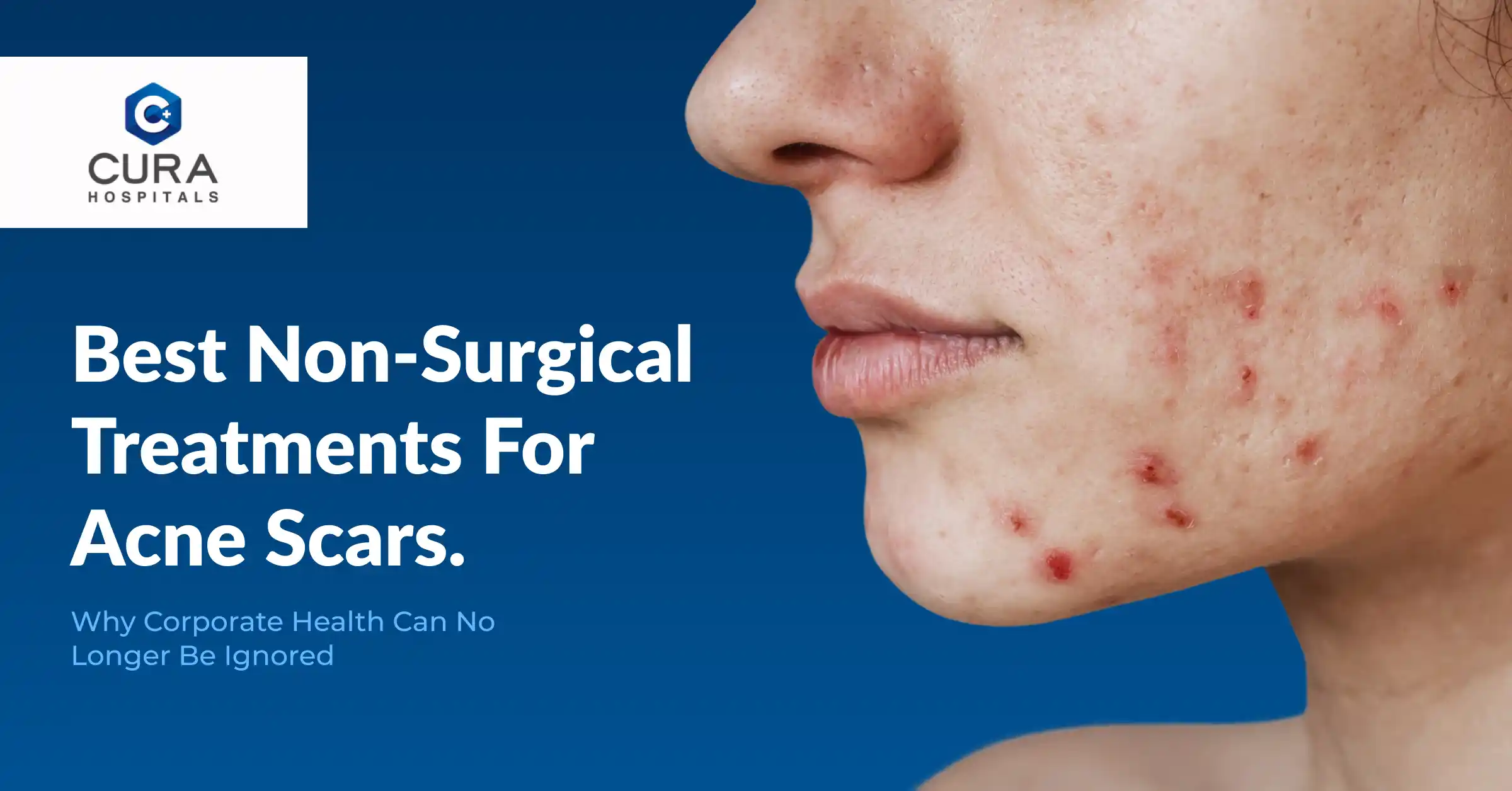
Acne scars are stubborn and require some sort of intervention to treat. Most people assume once the acne goes, the skin goes back to normal, but scars don’t follow that logic, and they can stick around long after the breakouts have stopped. Studies suggest that up to 95% of people with acne will develop some degree of scarring, yet most have no clear idea what will actually help.
Treatments like peels, microneedling, subcision and even dermal fillers are making headway in the non-surgical category. You really don’t need to go under the knife to see real improvement. What you do need is an honest understanding of what is available, what each treatment actually does, and, more importantly, what it won’t do.
What Are The Best Non-Surgical Treatments for Acne Scars?
1. Fractional Laser
Also known as: Fraxel, CO2 laser, ablative/non-ablative laser
Laser treatment for acne scars works by using different wavelengths of light to target the damaged and scarred skin. It creates micro-injuries that stimulate collagen production and resurface the outer layer of the skin.
There are two types:
- Ablative lasers (CO2)
- Non-ablative lasers
What’s new: CO2 lasers have become much more efficient, with newer devices offering customization that allows changes in settings for every scar type and skin tone.
Post-procedure care:
- Keep your skin moisturized and avoid sun exposure as much as possible.
- Use SPF 50 sunscreen religiously for at least a month.
- Avoid any actives like retinol and acids for a minimum of 2 weeks.
2. Microneedling
Also known as: Dermarolling, RF microneedling (Morpheus8, Genius RF)
Microneedling uses a device with tiny needles to create micro-injuries in the skin, allowing the body’s natural healing response to regenerate the outer layer of the skin and provide collagen remodelling.
What’s new: Radiofrequency (RF) microneedling combines traditional needling with heat, making it more effective than basic microneedling for deeper scars.
Post-procedure care:
- Avoid makeup for 24 hours
- Use a gentle, fragrance-free moisturizer
- No gym, swimming, or direct sun for 48 hours
3. Chemical Peels
Also known as: TCA peel, glycolic acid peel, salicylic acid peel, phenol peel
Chemical peels use acids to exfoliate the skin, prompting new skin cell formation and reducing the appearance of scarring and pigmentation.
Peels are categorized by depth:
- Superficial peels (AHA/BHA)
- Medium peels (TCA 20-35%)
- Deep peels (phenol)
What’s new: Combination peels and treatments like Cosmelan are a few advancements that work extremely well for acne scarring and pigmentation.
Post-procedure care:
- Keep skin hydrated and avoid picking at peeling skin
- Strict sun avoidance for 2 weeks
- No active ingredients until skin is fully healed
4. Dermal Fillers for Scars
Also known as: Fillers, subcision with filler, skin boosters (Sculptra, Radiesse)
Fillers are injected directly beneath sunken scars to physically lift them to the level of the surrounding skin. They are often combined with subcision (a minor procedure where fibrous scar tissue under the skin is detached).
Post-procedure care:
- Avoid pressure on the treated area for 24 hours
- No intense heat (saunas, hot yoga) for 48 hours
5. Platelet-Rich Plasma (PRP)
Also known as: Vampire facial, PRP therapy.
For PRP, a small amount of your own blood is used to heal the skin. The blood is spun at a high speed to separate the growth factors. This end product is then delivered directly into the skin by injecting or microneedling it.
Post-procedure care:
- Avoid picking at peeling skin
- Stay indoors and use proper sun protection for 2 weeks
- No active ingredients until skin is fully healed
- Hydrate well
Not sure where to start with your acne scars?
Book a consultation with our dermatology team and get a personalized treatment plan built around your skin type, scar depth, and lifestyle. Your skin deserves a plan, not a guess.
Side By Side Comparison
| Treatment (Common Name) | Best Scar Type | Downtime | Sessions Needed | Skin Tone |
| Fractional Laser (Fraxel / CO2 Laser) | Rolling, boxcar | 3 to 14 days | 3 to 5 | Fair to medium (caution on darker tones) |
| Microneedling (Dermarolling / RF Microneedling) | Rolling, texture | 1 to 3 days | 4 to 6 | All skin tones |
| Chemical Peel (TCA / Glycolic Peel) | Surface scars, PIH | 1 to 7 days | 3 to 6 | Light to medium |
| Dermal Fillers (Hyaluronic Filler) | Deep rolling, boxcar | Minimal | 1 to 2 | All skin tones |
| PRP (Vampire Facial) | Texture, overall rejuvenation | 1 to 2 days | 3 to 4 | All skin tones |
Why Are Acne Scars Hard to Treat?
Frequent acne breakouts that disrupt the dermal layer of skin end up damaging the tissue underneath. As the skin tries to repair itself, it either produces too much collagen (raised scars) or too little (depressed scars). Acne scarring can occur even when acne is being effectively managed.
Scars generally fall into three categories:
- Atrophic (depressed) – icepick, boxcar, rolling scars
- Hypertrophic (raised) – common on the chest and back
- Post-inflammatory hyperpigmentation (PIH) – dark spots left after a breakout heals
Most non-surgical treatments target atrophic scars, which are the most common type on the face
Which Treatment Is Best for Most Skin Types?
The one treatment that works well for all skin types, scar types and isnt too heavy on the pocket either is RF microneedling. It works on all skin tones without the risk of damage that might occur in some other non surgical procedures. It targets multiple scar types, the downtime is lesser comparatively, and results continue improving for up to six months after the treatment as collagen keeps building.
That said, the most effective approach for most people is a combination of treatments, such as microneedling plus PRP, or laser, and chemical peels as a maintenance therapy. No single treatment works for everyone, which is why a dermatologist consultation before committing to any procedure is always the right first step.
Ready to Find Out What Your Scars Actually Need?
Not every acne scar responds to the same treatment, and spending money on the wrong one is the most common mistake people make. At Cura Hospitals, our dermatologists assess your scar type, skin tone, and skin history before recommending anything.
No guesswork. No one-size-fits-all protocols. Just a treatment plan built around your skin.
Book your acne scar consultation
References:
- Tara Jennings, Robert Duffy, Matt McLarney, Micheal Renzi, Warren R Heymann, Ashley Decker, Naomi Lawrence, 2024, Acne scarring-pathophysiology, diagnosis, prevention and education: Part I, Available at, https://pubmed.ncbi.nlm.nih.gov/35792196/
- Nisma Mujahed, Faiza Shareef, Mayra B C Maymone, Neelam A Vashi, 2020, Microneedling as a Treatment for Acne Scarring: A Systematic Review, available at, https://pubmed.ncbi.nlm.nih.gov/31356435/
- Karolina Chilicka, Monica Rusztowicz, Renata Szygula, Danuta Nowicka, 2022, Methods for the Improvement of Acne Scars Used in Dermatology and Cosmetology: A Review, available at, https://pmc.ncbi.nlm.nih.gov/articles/PMC9147527/
Media Center Health Concerns?
Our specialists at Cura Hospitals are here to help with screening, diagnosis, risk assessment, and personalized treatment plans tailored to your health needs.
Schedule A ConsultationFrequently Asked Questions
Yes. Treatments like laser resurfacing, microneedling, chemical peels, subcision, and PRP effectively reduce acne scars with zero surgery involved. Most people see significant improvement within a few sessions.
Not always. Most treatments achieve a 50 to 80% improvement in appearance. Complete removal depends on scar depth, type, and skin tone but with the right treatment plan, scars become far less visible.
There is no single answer — it depends on your scar type. That said, RF microneedling and fractional laser are consistently top performers. For rolling scars specifically, subcision combined with fillers or PRP delivers the best results.
Permanent complete removal is rare, but long-lasting improvement is very achievable. Treatments like subcision and laser remodelling produce results that hold for years with proper skincare and sun protection.
No. Genetics play a role but so do hormones, diet, stress, skincare habits, and environment. Having a family history of acne increases your risk but does not guarantee it.
Related Blogs
Kidney Stone Size Guide: Can It Pass Naturally, or Does It Need RIRS, URS, or PCNL?

Leg Pain, Swelling or a Non-Healing Wound: Vascular Surgeon, Orthopaedic Doctor or Diabetologist?