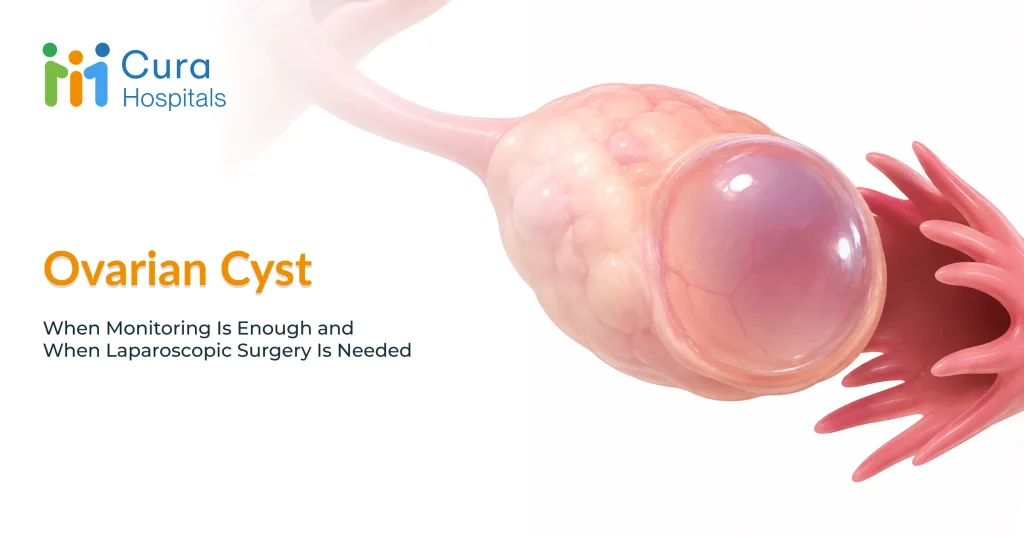
Fibroid Treatment: Medication, Myomectomy or Hysterectomy
 Cura Hospitals

At a Glance: Uterine fibroids are non-cancerous growths, and the treatment options include medication, myomectomy and hysterectomy. The right option depends on fibroid size, symptoms, age, and whether you want children in the future.
Monitoring: appropriate for small, symptom-free fibroids, with periodic follow-up ultrasounds
Medication: controls symptoms like heavy bleeding but doesn’t remove or permanently shrink the fibroid
Myomectomy: removes fibroids while preserving the uterus shall be the usual choice for women who want to preserve fertility
Hysterectomy: removes the uterus entirely; the most definitive option, generally for women who’ve completed their families
Uterine fibroids are non-cancerous growths that form in or around the uterus, and the right fibroid treatment depends on their size, location, your symptoms, and whether you still want to have children. There is no single correct treatment for fibroids. Monitoring, medication, myomectomy, and hysterectomy are all genuine options, and the choice is made differently for every woman.
If you have just been told you have fibroids, it is natural to feel a rush of questions. Does this mean surgery? Will this affect your ability to have children? Why does your doctor seem unhurried about something that feels urgent to you? None of these reactions mean you are overreacting.
Fibroids are extremely common, affecting a large share of women by the time they reach their fifties, and most cases can be managed calmly once you understand the actual decision points involved. This article walks through how fibroid symptoms are diagnosed, what factors guide treatment, and how doctors decide between monitoring, medication, myomectomy, and hysterectomy.
Fibroid Symptoms and Diagnosis
Symptoms of fibroids typically include heavy or prolonged periods, pelvic pressure or pain, a swollen or enlarged abdomen, and pressure on the bladder or bowel, though many fibroids cause no symptoms at all. Diagnosis usually starts with a pelvic ultrasound, which confirms the number, size, and location of fibroids.
Not every fibroid needs to be found through symptoms. Many are detected during a routine scan or a checkup for something unrelated. When symptoms are present, they tend to reflect where the fibroid sits.
Fibroids that bulge into the uterine cavity often cause heavier bleeding, while larger fibroids pressing outward tend to cause more pressure, back pain, or a frequent urge to urinate. Your gynaecologist will usually combine your symptoms with the ultrasound findings before discussing next steps.
Factors That Guide Fibroid Treatment
Doctors weigh five main factors when recommending fibroid treatment:
- Fibroid size and location
- Symptom severity
- Your age
- Whether you want to have children in the future
- How the fibroid is affecting your daily life
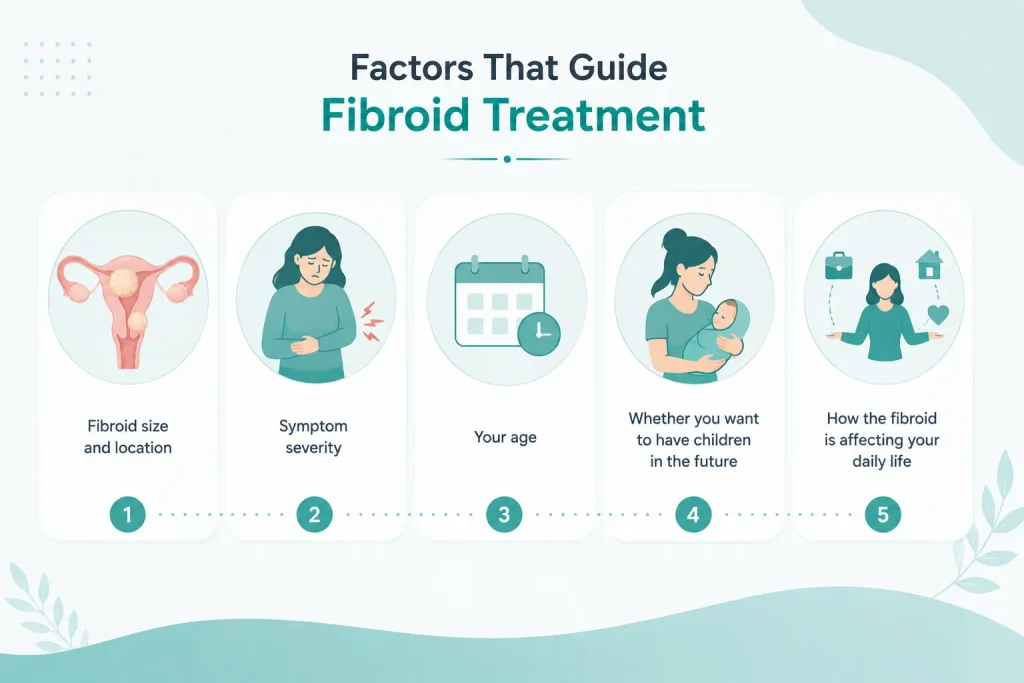
No single factor decides the outcome on its own.
A small, symptom-free fibroid diagnosed by chance is treated very differently from a large fibroid causing heavy bleeding and anaemia. A woman actively trying to conceive is guided differently than a woman close to menopause who has completed her family.
Clinical guidance is consistent on this point. Fibroid care should be individualised rather than following one fixed pathway, and treatment should reflect what actually matters to the patient in front of the doctor. A detailed gynaecology consultation is where these factors actually get weighed against each other.
“Patients sometimes feel like I’m not taking their fibroids seriously enough because I’m not rushing straight to surgery. But fibroid treatment genuinely isn’t generic. A small fibroid found by chance in a woman close to menopause is a completely different conversation from a large fibroid in someone actively trying to conceive. My job is to understand what matters most to you before we talk about options.”
— Dr. Divya Chandrashekar, Gynaecology and Obstetrics,
Cura Hospitals
When Monitoring May Be Enough
Monitoring, rather than active treatment, is usually appropriate for fibroids that are small, causing no symptoms, and not affecting fertility plans. Many fibroids simply do not need to be treated at all, especially if they are found incidentally.
This does not mean forgetting about the fibroid entirely. It usually means a follow-up ultrasound at an interval your gynaecologist sets, so any change in size or new symptoms gets caught early. Fibroids often shrink naturally after menopause as hormone levels drop, which is one reason observation can be a genuinely reasonable long-term plan for women closer to that stage of life, rather than a way of avoiding a harder decision. Your gynaecologist can help set the right follow-up schedule for your specific case.
If you have been diagnosed with fibroids but have no major symptoms, consult a gynaecologist to understand whether monitoring or active treatment is appropriate for you.
Medication and Symptom Control
Medication is generally the first step for fibroids causing manageable symptoms, particularly heavy bleeding, and it works by controlling symptoms rather than removing the fibroid itself. This makes it a useful option while you decide on, or wait for, a more definitive treatment.
Options include hormonal treatments such as birth control pills or a hormonal IUD to reduce bleeding, tranexamic acid to control heavy flow on the days you need it, and anti-inflammatory medication for pain. For women who need more significant symptom relief before a planned procedure, short courses of stronger hormonal medication can shrink fibroids temporarily.
Medication does not make a fibroid disappear permanently, and symptoms usually return once treatment stops, but for many women it is enough to manage day-to-day life comfortably, especially while other options are being considered. If heavy or irregular bleeding is your main concern, our gynaecologist consultation for irregular periods and PMOS covers this alongside any hormonal causes.
Myomectomy
Myomectomy is surgery to remove fibroids while leaving the uterus in place, and it is generally the recommended option for women who want to preserve their fertility or simply wish to keep their uterus. The right surgical approach depends on the fibroid’s size, number, and position.
| Type of Myomectomy | What does it include |
| Laparoscopic myomectomy | Uses small incisions and is typically associated with less pain, a shorter hospital stay, and a faster return to normal activity compared with open surgery. |
| Hysteroscopic myomectomy | Used specifically for fibroids growing into the uterine cavity and does not require any external incision at all. |
| Open, abdominal myomectomy | Still sometimes necessary for very large or numerous fibroids where a minimally invasive approach is not safe. |
Even in women over 40 who still hope to conceive, laparoscopic myomectomy has shown good outcomes for both symptom relief and future pregnancy in dedicated studies of this age group (Tinelli et al., 2021).
It is worth knowing, too, that fibroids can occasionally return after myomectomy, since new ones can form even after existing ones are removed, which is why your gynaecologist will usually discuss long-term expectations alongside the procedure itself. Myomectomies at Cura are carried out at our accredited surgical facility, with the surgical approach specific to your fibroid pattern.
Hysterectomy
Hysterectomy, removal of the uterus, is generally discussed when fibroids are causing significant symptoms and the woman does not wish to preserve fertility or her uterus, since it is the only treatment that removes fibroids permanently and prevents new ones from forming. It remains the most definitive fibroid treatment available.
This fibroid surgery usually comes up for women who have completed their families, are approaching menopause, or have not found lasting relief from less invasive options. Where suitable, a minimally invasive hysterectomy is generally preferred for faster recovery.
Research comparing quality of life after the two procedures has found that women who choose hysterectomy often report greater short-term relief and satisfaction than those who choose myomectomy because there is no possibility of the fibroids returning afterward (Nicholson et al., 2019).
That said, this is a deeply personal decision, and there is no medical requirement to choose the “more definitive” option if it does not match what you actually want for your body and your future. Where hysterectomy is the right choice, it is performed at our accredited surgical facility using the least invasive approach suitable for you.
Fertility and Recovery
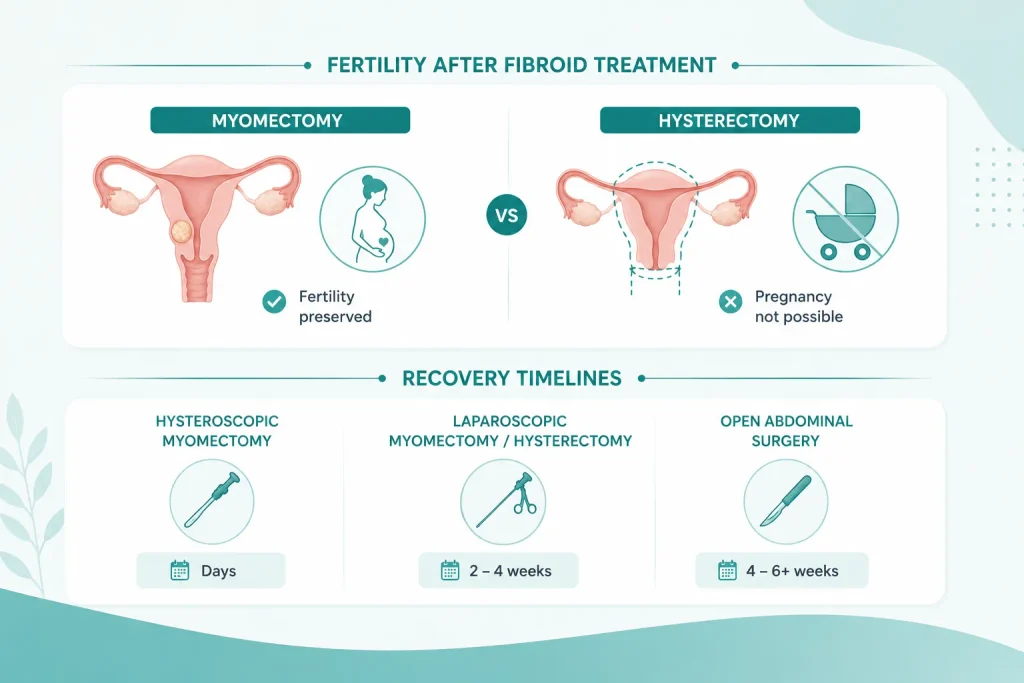
Fertility after fibroid treatment depends heavily on which option is chosen. Myomectomy is generally fertility-preserving, while hysterectomy ends the possibility of pregnancy entirely, so this single factor often shapes the entire treatment conversation more than any other.
Recovery timelines vary by procedure. Hysteroscopic myomectomy typically allows a return to normal activity within days, laparoscopic myomectomy or hysterectomy usually takes two to four weeks, and open abdominal surgery can take four to six weeks or longer.
Before agreeing to any treatment path, it is worth asking your gynaecologist a few direct questions.
- Will this option affect my chances of pregnancy?
- How likely are my fibroids to come back?
- What would happen if I simply chose to monitor for now?
- What does recovery actually look like for someone in my situation, not just in general?
A good gynaecologist will welcome these questions rather than rush past them, and asking them is not a sign of distrust. It is simply part of making a decision that is genuinely yours.
Talk to a Gynaecologist Before Deciding
The right fibroid treatment depends on details specific to you, your fibroid’s size and position, your symptoms, your age, and your own fertility goals, and no article, including this one, can substitute for a proper examination and a conversation with your gynaecologist.
Cura’s gynaecology and obstetrics team, including Dr. Divya Chandrashekar and Dr. Swathi V S, regularly helps women work through exactly this decision, reviewing ultrasound findings, explaining monitoring, medication, myomectomy, and hysterectomy in plain terms, and supporting whichever path fits your goals. Surgical procedures, when needed, are performed at our accredited surgical facility.
If you are also dealing with irregular periods or suspect a hormonal cause alongside your fibroids, our gynaecologist consultation for irregular periods and PCOS can help address both together.
Book a gynaecology consultation with your ultrasound report to discuss fertility-preserving and surgical options, whichever is genuinely right for you.
If you are unsure which fibroid treatment is right for you, get a specialist evaluation to discuss your symptoms, fertility goals, and available treatment options.
References
Nicholson, W.K. et al. (2019) ‘Short-term health-related quality of life after hysterectomy compared with myomectomy for symptomatic leiomyomas‘, Obstetrics & Gynecology, 134(2), pp. 261–269.
Society of Obstetricians and Gynaecologists of Canada (2025) ‘Guideline No. 461: the management of uterine fibroids‘, Journal of Obstetrics and Gynaecology Canada.
Tinelli, A. et al. (2021) ‘Laparoscopic intracapsular myomectomy in women 40 years old and over with symptomatic uterine fibroids: a pilot study‘, The Surgery Journal, 7(1), pp. e47–e53.
Uncategorized Health Concerns?
Our specialists at Cura Hospitals are here to help with screening, diagnosis, risk assessment, and personalized treatment plans tailored to your health needs.
Schedule A ConsultationFrequently Asked Questions
The decision usually comes down to fertility goals. Myomectomy removes fibroids while preserving the uterus and future pregnancy potential, while hysterectomy removes the uterus entirely and is generally reserved for women who have completed childbearing or do not wish to preserve fertility.
For many women, yes, at least for a period of time. Medication controls symptoms like heavy bleeding and pain but does not remove the fibroid or shrink it permanently. It works well as an ongoing option for milder symptoms or as a bridge before a planned procedure.
No. Small, symptom-free fibroids found incidentally are often simply monitored with periodic ultrasounds. Surgery becomes a more active consideration once fibroids cause significant symptoms, affect fertility, or continue growing.
Myomectomy is generally chosen specifically to preserve fertility, and many women go on to conceive afterward. Your surgical approach and recovery time can affect timing, so this is worth discussing directly with your gynaecologist before the procedure.
Recovery depends on the technique. Hysteroscopic myomectomy often allows return to normal activity within days, laparoscopic procedures typically take two to four weeks, and open abdominal surgery can take four to six weeks or more.