Fatty Liver Diet – Foods to Eat, Foods to Avoid & Diet Plan for Recovery


Key Takeaways
Food is the main part of fatty liver treatment. Guidelines advise a Mediterranean-style pattern, less sugar and fewer ultra-processed foods, and gradual weight loss (Tacke et al., 2024).
Losing about 7 to 10% of body weight improves liver fat and inflammation, and greater weight loss gives bigger gains (Vilar-Gomez et al., 2015).
Foods to avoid with fatty liver include sugary drinks, sweets, deep-fried and packaged snacks, refined flour products and alcohol.
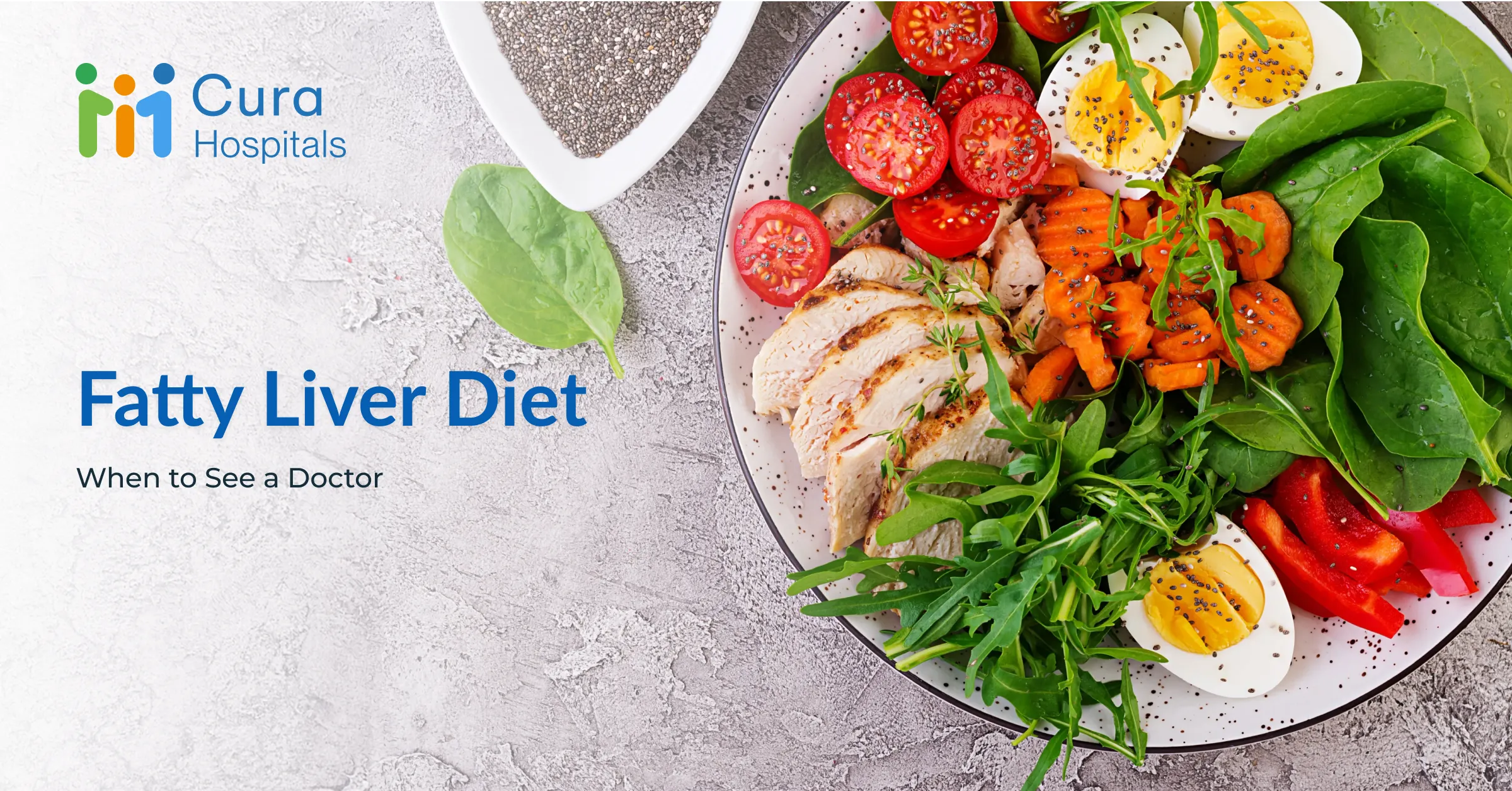
Foods to eat include vegetables, whole fruits, dal and legumes, whole grains and millets, nuts, fish and low-fat dairy, cooked with a modest amount of oil.
Crash diets, detox teas and supplements have no proven role in fatty liver, and very rapid weight loss can sometimes make liver inflammation worse.
The sample Indian plan below is a general guide. A doctor or dietitian should adjust it, especially if you have diabetes, kidney disease or another condition.
When people hear “fatty liver”, the first question is almost always, “what should I eat?” It is a fair question, because food and weight are the main tools we have. The encouraging part is that you do not need special products or a strict plan. Steady, ordinary changes to what is on your plate make the biggest difference.
This guide explains the principles of a fatty liver diet, the foods to eat and the foods to avoid, and gives a sample day of Indian meals.
Questions about diet and liver health?
Where Diet Fits in Fatty Liver Treatment
Fatty liver treatment starts with lifestyle. Weight loss, food, activity and avoiding alcohol come first, along with good control of diabetes, cholesterol and blood pressure. Medicines and surgery are used only in selected people.
In a year-long lifestyle programme of 293 people with liver inflammation, about a quarter saw the inflammation resolve, and the more weight they lost, the better the results (Vilar-Gomez et al., 2015).
Principles of a Fatty Liver Diet
- Aim for gradual weight loss of about 7 to 10% of your body weight. If you are at a healthy weight, the goal is to keep it and to cut down sugar and fried food. It also depends on the grade of the fatty liver.
- Follow a Mediterranean-style pattern: plenty of vegetables, fruit, legumes, whole grains, nuts and fish, with less red meat and few ultra-processed foods (Tacke et al., 2024).
- Cut sugary drinks first. They are the easiest change with the biggest effect.
- Use the plate method: half the plate vegetables, a quarter protein such as dal, eggs, fish or paneer, and a quarter whole grains.
- Eat regular meals. Long gaps followed by large meals make it harder to control weight and sugar.
- Keep portions of rice, roti and sweets measured, not removed.
- Avoid alcohol, or speak to your doctor about it.
Fatty Liver Diet Chart – Foods to Eat
| Food group | Good choices | Notes |
| Vegetables | Leafy greens such as palak and methi, gourds, beans, carrot, tomato, cabbage, cauliflower | Fill half the plate. They add fibre with few calories. |
| Fruit | Whole fruit such as guava, apple, papaya, orange and berries | Eat the fruit, not the juice. |
| Whole grains and millets | Whole wheat roti, ragi, jowar, bajra, oats, brown or red rice in measured portions | Choose these over maida and polished rice most of the time. |
| Protein | Dal, rajma, chana, sprouts, eggs, fish, skinless chicken, low-fat curd and paneer | Grill, bake, steam or sauté lightly instead of deep-frying. |
| Nuts and seeds | A small handful of almonds, walnuts, flaxseed or pumpkin seeds | They are high in calories, so keep to a small portion. |
| Cooking oil | A small, measured amount of the oil you use at home | Olive oil is the one studied in Mediterranean diets. Use less of any oil. |
| Drinks | Water, unsweetened buttermilk, plain tea, coffee without sugar | Studies link regular coffee with less liver scarring (Rinella et al., 2023), but do not start drinking it if you do not already. |
| Doctor’s Insight “Patients expect a long list of forbidden foods. In practice, three things do most of the work: cut sugary drinks, reduce fried and packaged food, and move more. Small, steady changes that a family can keep up are better than a strict diet that lasts two weeks.” DR. ABRAR MOHAMMED M.B.B.S, M.S, Orthopaedics Registered Medical Practitioner | KMC Registration No: 116389 |
Fatty Liver Diet Chart – Foods to Avoid
| Food | Examples | Why it matters |
| Sugary drinks | Soft drinks, packaged juice, sherbet, sweet chai and coffee | Added sugar is a main driver of liver fat. Guidelines advise limiting sugar-sweetened drinks (Tacke et al., 2024). |
| Sweets and desserts | Mithai, cakes, biscuits, ice cream, chocolates | They add sugar and calories quickly. |
| Refined flour foods | White bread, maida-based naan and parotta, bakery items, noodles, large portions of polished white rice | They raise blood sugar fast and are easy to overeat. |
| Deep-fried foods | Samosa, pakora, puri, fries, chips | They are dense in calories and often cooked in reused oil. |
| Packaged and processed foods | Namkeen, instant noodles, ready meals, processed meats | Ultra-processed foods are advised against in the guidelines (Tacke et al., 2024). |
| Large amounts of red meat | Mutton and beef dishes, especially fried or in rich gravies | Better kept to small, occasional portions. |
| Alcohol | Beer, wine, spirits | Alcohol adds to liver injury, and avoiding it is advised. |
| Too much salt | Pickles, papad, salted snacks | Salt can raise blood pressure, which often goes with fatty liver. |
A Sample Fatty Liver Diet Plan
This is an example of a day of Indian meals. It does not list calories, because needs differ with height, weight, age, activity and health conditions. A doctor or dietitian can give you numbers that suit you.
| Meal | Option 1 | Option 2 |
| Early morning | Warm water and a few soaked almonds | Unsweetened tea or coffee |
| Breakfast | Vegetable besan chilla with mint chutney and a bowl of curd | Ragi dosa or vegetable oats upma with sambar |
| Mid-morning | A whole fruit such as guava or apple | A glass of unsweetened buttermilk |
| Lunch | Two whole wheat or jowar rotis, dal, a large helping of vegetables, salad and curd | A small bowl of brown rice, dal, vegetables and salad |
| Evening snack | Roasted chana, or a sprouts chaat | A small handful of mixed nuts |
| Dinner | Vegetable soup and a bowl of vegetable khichdi | Grilled fish or paneer with sautéed vegetables and one roti |
Some points on using the plan. Keep dinner light and finish two to three hours before bed. Swap dal for eggs, fish or chicken on some days. Drink water through the day. If you have diabetes, kidney disease or are on medicines, ask your doctor before changing portions or protein.
Weight Loss, Exercise and Alcohol
Weight loss of about 7 to 10% is the target for most people who are overweight, and slower is safer than fast. Food alone is not enough, and exercise helps the liver even when weight changes little. The World Health Organization advises at least 150 minutes a week of moderate activity, such as brisk walking, with muscle-strengthening activities on two or more days (Bull et al., 2020). Check with your doctor before starting if you have heart problems, joint problems or are very unfit.
Avoid alcohol or at least talk to your doctor about it. Guidelines discourage alcohol in people with fatty liver (Tacke et al., 2024).
Myths About the Fatty Liver Diet
- Myth: detox drinks and herbal supplements clear the liver. There is no proof that they do, and some herbal products have damaged the liver. Do not start any without asking your doctor.
- Myth: fat-free means safe. Many low-fat packaged foods are high in sugar.
- Myth: only overweight people get fatty liver. It can affect people of normal weight too.
- Myth: skipping meals helps. It tends to lead to overeating later and does not help the liver.
- Myth: you must give up rice and roti. Portion size and the type of grain matter more than removing them.
Special Situations
- Diabetes: your doctor may adjust medicines as your weight and diet change, so ask before making big changes.
- Children and teenagers: do not put a child on a diet without a paediatrician. The aim is usually to slow weight gain while the child grows.
- Normal weight: you can still benefit from less sugar and fried food, and from regular exercise.
- Vegetarians: a vegetarian diet works well with fatty liver. Make sure there is enough protein from dal, legumes, curd, paneer and sprouts.
- Kidney disease: protein and potassium may need limits, so follow your doctor’s advice.
When to See a Doctor or Dietitian
See a doctor if your fatty liver was found on a scan or test and you have not had a full check, if your blood sugar, cholesterol or blood pressure is high, or if your weight is not coming down despite effort. A dietitian can help turn the advice into a plan that suits your food habits. Get medical help promptly if you notice yellow eyes or skin, swelling of the legs or belly, or lasting tiredness or other fatty liver symptoms.
Fatty Liver Care at Cura Hospitals
The gastroenterology department at Cura Hospitals provides liver disease management, including fatty liver disease, with regular monitoring and personalised care plans. The hospitals are in Kammanahalli and on Kanakapura Road, Bengaluru.
For appointments or general enquiries, reach out to the hospital.
Contact details
Cura Hospitals, Kammanahalli: #1, Bethel St, HRBR Layout 2nd Block, Kalyan Nagar, Kammanahalli, Bengaluru, Karnataka 560043
Cura Hospitals, Kanakapura Road: No.18, Kanakapura Rd, Venkatareddy Layout, Doddakallasandra, Uttarahalli Hobli, Bengaluru, Karnataka 560062
Phone: +91 87480 30303 | Email: info@curahospitals.com | 24/7 emergency: +91 84312 41403
This article is for general health education and is not a substitute for personal medical advice. Please speak to your treating doctor or a dietitian about a diet that suits you.
References
Bull, F.C., Al-Ansari, S.S., Biddle, S. et al. (2020) ‘World Health Organization 2020 guidelines on physical activity and sedentary behaviour’, British Journal of Sports Medicine, 54(24), pp. 1451-1462.
Rinella, M.E., Neuschwander-Tetri, B.A., Siddiqui, M.S. et al. (2023) ‘AASLD practice guidance on the clinical assessment and management of nonalcoholic fatty liver disease’, Hepatology, 77(5), pp. 1797-1835.
Tacke, F., Horn, P., Wai-Sun Wong, V. et al. (2024) ‘EASL-EASD-EASO clinical practice guidelines on the management of metabolic dysfunction-associated steatotic liver disease (MASLD)’, Journal of Hepatology, 81(3), pp. 492-542. doi:10.1016/j.jhep.2024.04.031.
Vilar-Gomez, E., Martinez-Perez, Y., Calzadilla-Bertot, L. et al. (2015) ‘Weight loss through lifestyle modification significantly reduces features of nonalcoholic steatohepatitis’, Gastroenterology, 149(2), pp. 367-378.
Media Center Health Concerns?
Our specialists at Cura Hospitals are here to help with screening, diagnosis, risk assessment, and personalized treatment plans tailored to your health needs.
Schedule A ConsultationFrequently Asked Questions
Guidelines advise a Mediterranean-style pattern: plenty of vegetables, fruit, legumes, whole grains, nuts and fish, less red meat, and few sugary and ultra-processed foods. Together with gradual weight loss, this is the main part of treatment.
Sugary drinks, sweets, deep-fried foods, packaged snacks, refined flour products, large amounts of red meat and alcohol. Cutting sugary drinks is a good first step.
Yes, in measured portions. Prefer whole wheat, millets and brown or red rice over maida and polished rice, and fill half your plate with vegetables.
Studies link regular coffee drinking with less liver scarring. If you already drink it, keep it without sugar. There is no need to start if you do not drink it.
Yes, in sensible portions. Eggs and low-fat paneer are good protein sources, and nuts are healthy but high in calories, so keep to a small handful.
It varies. Studies of lifestyle programmes followed people for a year, and the gains grew with the amount of weight lost. Your doctor will decide when to repeat blood tests or an ultrasound.
Diet and exercise can improve or clear early fatty liver in many people, but results vary and advanced scarring is harder to reverse. Your doctor will advise whether you also need other treatment.
There is no proven benefit, and some herbal products can harm the liver. Please check with your doctor before taking any.