
Root Canal Treatment: Signs You Need It, Steps, Pain, Recovery & When to See a Dentist
 Cura Hospitals

There are few things that disrupt your day quite like a sudden jolt of tooth pain, the kind that makes you wince when you bite into something or flinch at a sip of cold water. For a lot of people, that pain eventually leads to one word that brings on a fair amount of dread: root canal. The truth is, root canal treatment has come a long way from its old reputation, and understanding what it actually involves can take a lot of the fear out of the process.
What is Root Canal Treatment?
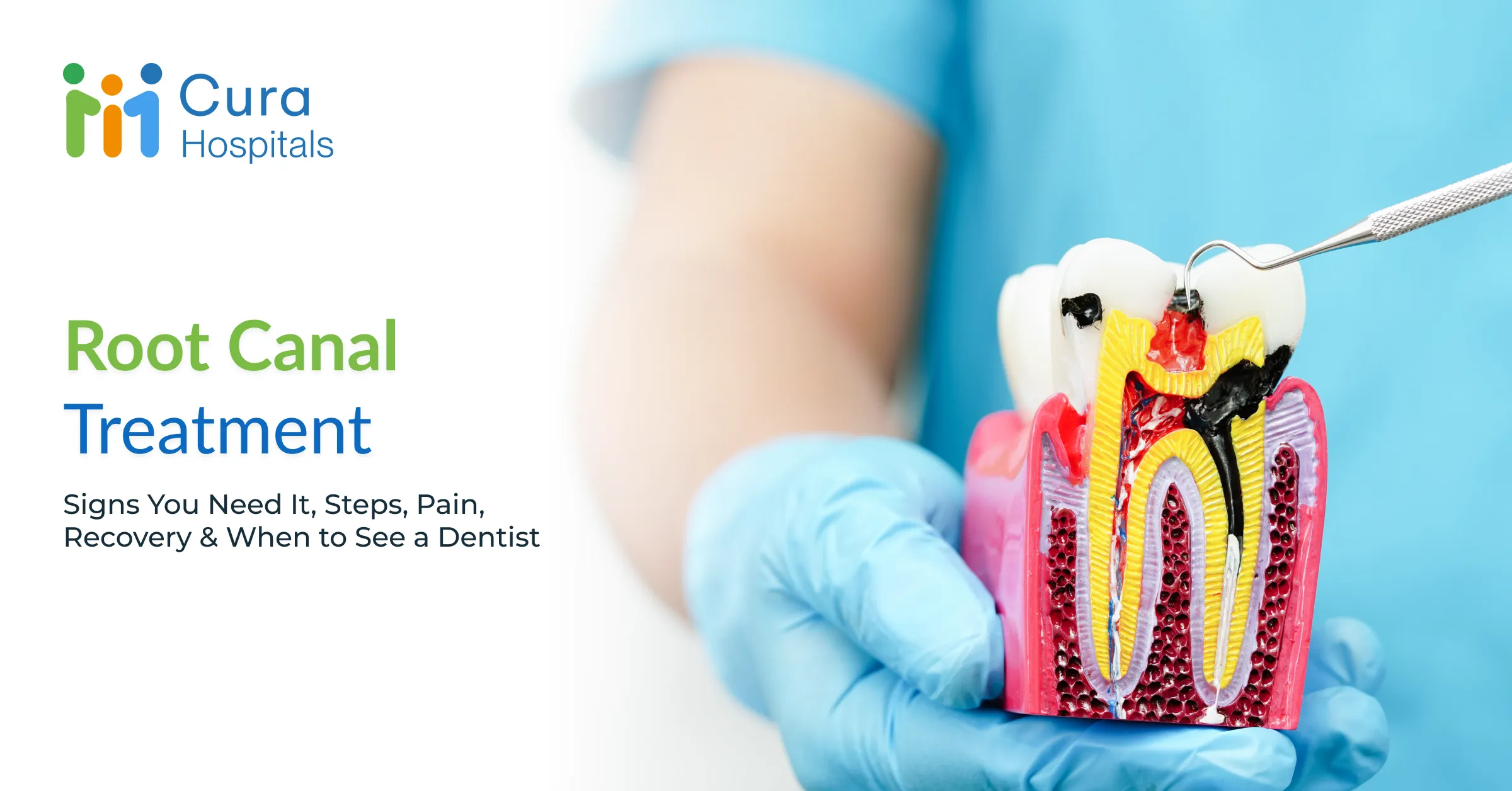
Root canal treatment is a dental procedure used to treat infection or severe damage inside the innermost part of a tooth, called the pulp. The pulp contains nerves, blood vessels, and connective tissue, and when it becomes infected or inflamed, usually due to deep decay, a crack, or repeated dental procedures on the same tooth, it can cause significant pain and, if left untreated, lead to an abscess or tooth loss.
During the procedure, the infected or damaged pulp is carefully removed, the inside of the tooth is cleaned and disinfected, and the empty space is filled and sealed to prevent further infection. The goal is simple: save your natural tooth rather than removing it altogether.
Signs You May Need a Root Canal Treatment
It is not always obvious that a toothache needs more than just a filling. A few signs tend to point specifically toward the need for root canal treatment:
- Persistent or throbbing tooth pain, especially pain that lingers well after eating or doesn’t go away on its own
- Sensitivity to hot or cold that lasts long after the stimulus is removed, rather than a quick, fleeting twinge
- Pain when chewing or applying pressure on a specific tooth
- Swelling or tenderness in the gums near the affected tooth
- A small, pimple-like bump on the gums, which can indicate a developing abscess
- Darkening or discolouration of the tooth, which can suggest the pulp inside has been damaged
- A tooth that feels loose or has a visible crack, chip, or deep cavity
If you are dealing with any combination of these signs, it is worth getting it checked rather than waiting to see if the pain settles on its own.
Tooth Pain vs Sensitivity
It helps to understand the difference between general sensitivity and the kind of tooth pain treatment a root canal addresses, since the two are often confused.
Sensitivity is usually a brief, sharp sensation triggered by something specific, like cold water, ice cream, or sweet food, and it tends to fade within a few seconds of the trigger being removed. This is often caused by worn enamel or minor gum recession exposing the tooth’s surface, and it can frequently be managed with desensitising toothpaste or minor dental treatment.
Pain that signals a deeper problem, on the other hand, tends to linger well beyond the trigger, can wake you up at night, throbs on its own without any obvious cause, or intensifies when you bite down. This type of pain usually points toward inflammation or infection inside the tooth and is a stronger indicator that root canal treatment may be needed.
What Happens During Treatment
A root canal procedure typically follows a fairly structured sequence:
- Examination and X-ray: Your dentist examines the tooth and takes an X-ray to assess the extent of damage or infection and understand the shape of the root canals
- Local anaesthesia: The area around the tooth is numbed completely before any work begins
- Accessing the pulp: A small opening is made in the top of the tooth to reach the infected pulp chamber
- Cleaning and shaping: The infected pulp is removed, and the inside of the tooth, including the root canals, is carefully cleaned and shaped
- Filling and sealing: Once cleaned, the canals are filled with a biocompatible material and sealed to prevent reinfection
- Restoration: In most cases, a crown or filling is placed on top of the treated tooth to restore its strength and function
The entire process is designed around precision and patient comfort, with each step aimed at thoroughly eliminating infection while preserving as much of the natural tooth structure as possible.
Is Root Canal Painful?
This is probably the single biggest concern people have, and understandably so, given how root canals are often portrayed. The reality is quite different from the reputation. With modern techniques and effective local anaesthesia, most patients feel little to no pain during the actual procedure itself.
A painless root canal is very much the standard today, not the exception. The discomfort that people associate with root canals is often actually caused by the infection itself, the pain you are already experiencing before treatment even begins. Once the infected pulp is removed and the source of that pain is addressed, most patients report significant relief.
Some mild soreness or tenderness in the days following the procedure is normal, similar to what you might feel after any dental work, and this is usually manageable with over-the-counter pain relief as advised by your dentist.
Number of Sittings
The number of visits needed for root canal treatment depends on the complexity of the case, the specific tooth involved, and the extent of infection. Many straightforward cases can be completed in a single sitting, particularly with modern equipment and techniques that allow thorough cleaning and filling in one visit.
More complex cases, such as teeth with curved or unusually shaped canals, significant infection, or molars with multiple roots, may require two or more sittings spread a few days to a week apart. This allows the dentist to ensure the infection is fully cleared before sealing the tooth permanently. Your dentist will be able to give you a clearer estimate after the initial examination and X-ray.
Root Canal vs Extraction
When a tooth is significantly damaged or infected, there are usually two paths forward: root canal treatment to save the tooth or extraction to remove it entirely. While extraction might seem like the simpler option, saving your natural tooth through root canal treatment generally comes with several advantages.
Natural teeth function better than replacements when it comes to chewing efficiency and maintaining proper bite alignment. Keeping your natural tooth also prevents the surrounding teeth from shifting out of position over time, something that commonly happens after an extraction if the gap isn’t addressed.
Extraction does remain necessary in certain situations, such as when a tooth is too severely damaged or fractured to be restored, or when there isn’t enough healthy tooth structure left to support a filling or crown. Your dentist will assess the specific condition of the tooth and walk you through which option makes more sense for your situation.
Recovery and Aftercare for Root Canal Treatment
Recovery after root canal treatment is usually straightforward, and most people are back to their normal routine within a day or two. A few aftercare tips can help the healing process go smoothly:
- Avoid chewing on the treated tooth until your permanent crown or filling is placed, especially if a temporary filling was used in-between sittings
- Stick to softer foods for the first day or two while any mild soreness settles
- Maintain regular brushing and flossing, being gentle around the treated area
- Take any prescribed or recommended pain relief as directed if there is mild discomfort
- Avoid very hot or very cold foods for the first day if the area feels sensitive
- Attend your follow-up appointment for the permanent restoration, since leaving a treated tooth without its final crown or filling for too long can increase the risk of reinfection or fracture
If swelling, pain, or discomfort worsens instead of improving over the following days, it is worth reaching out to your dentist rather than waiting it out.
When to Consult CURA’s Dentistry Department
You don’t need to wait for unbearable pain before getting a tooth checked. Reach out to Cura’s dentistry team if:
- You have persistent tooth pain that lingers beyond a few days
- You notice sensitivity to hot or cold that lasts well after the trigger is removed
- You see swelling, a bump on the gums, or discolouration around a specific tooth
- You have a cracked, chipped, or deeply decayed tooth that is causing discomfort
- You are looking for a trusted dental clinic near Raghuvanahalli for a routine check-up or a second opinion on a recommended treatment
If you are looking for a dentist in Bengaluru for root canal treatment, Cura Multispeciality Hospitals offers experienced dental specialists who combine careful diagnosis with modern, comfort-focused treatment to help you keep your natural smile intact.
Book your consultation for root canal treatment at Cura today.
Media Center Health Concerns?
Our specialists at Cura Hospitals are here to help with screening, diagnosis, risk assessment, and personalized treatment plans tailored to your health needs.
Schedule A ConsultationFrequently Asked Questions
Not as much as its reputation suggests. With effective local anaesthesia, most patients feel little to no pain during the actual procedure. The pain people associate with root canals is usually from the infection itself, which the treatment relieves rather than causes.
During the procedure, discomfort is minimal since the area is fully numbed. Afterward, some mild soreness or tenderness for a day or two is normal, similar to what you’d feel after any dental work, and it’s usually manageable with simple pain relief.
Initial soreness typically settles within a few days. Full healing of the surrounding bone and tissue can take a few weeks to a few months, though you can usually return to normal eating and routine activities much sooner, especially once the permanent crown or filling is placed.
Yes, in most cases. Root canal treatment removes infection while preserving your natural tooth, which generally functions better than a replacement and helps keep neighbouring teeth properly aligned. It’s usually the preferred option over extraction whenever the tooth can be saved.
Root canal treatment has a high success rate, and most treated teeth last for many years with proper restoration and care. However, like any medical procedure, there’s a small chance of reinfection or complications, which is why follow-up and good oral hygiene matter after treatment.
Related Blogs
Kidney Stone Size Guide: Can It Pass Naturally, or Does It Need RIRS, URS, or PCNL?

Leg Pain, Swelling or a Non-Healing Wound: Vascular Surgeon, Orthopaedic Doctor or Diabetologist?