Pneumonia Its Symptoms, Causes, Types and Treatment What You Need To Know


Key Takeaways
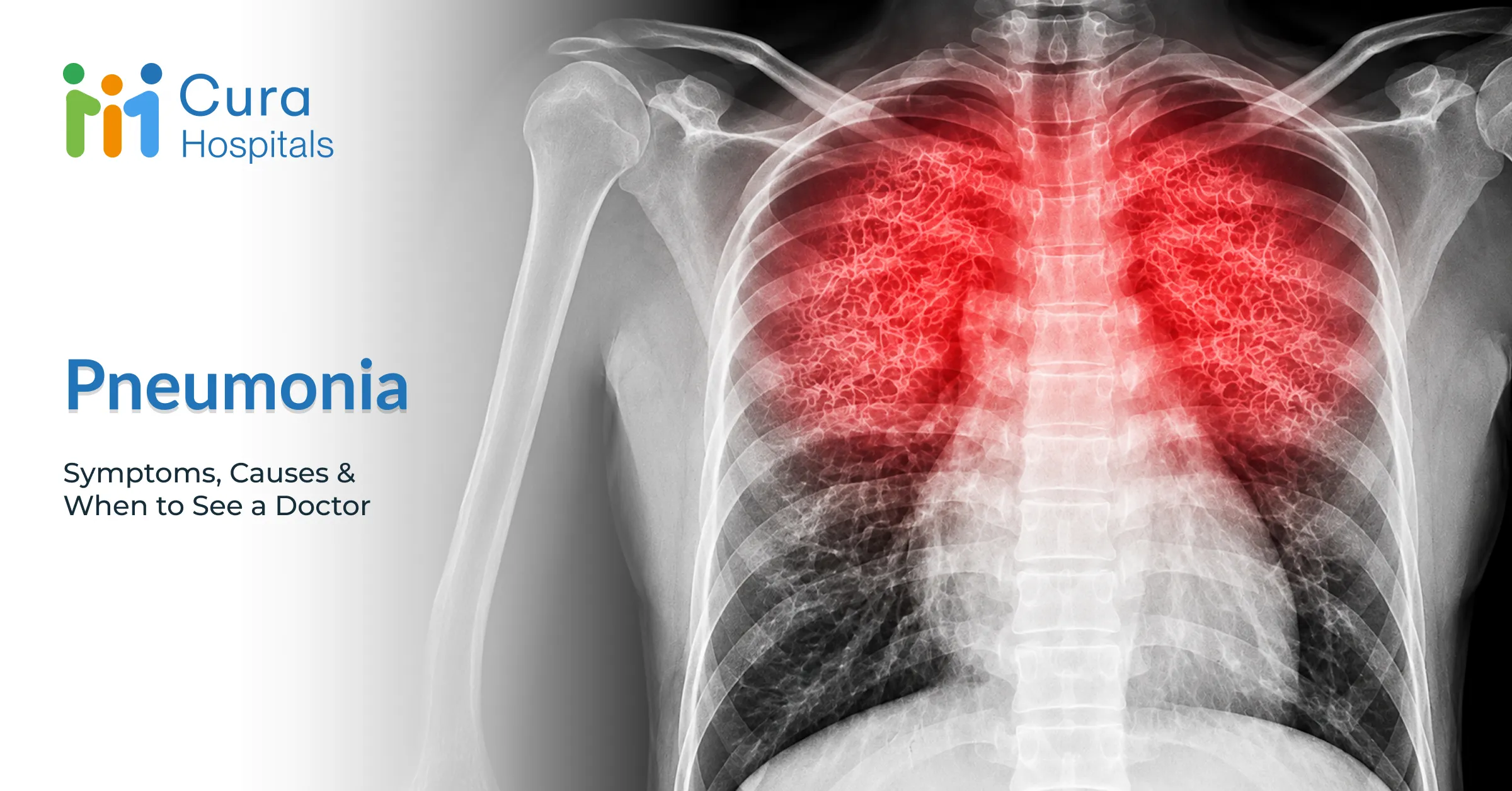
Pneumonia is the infection of the lungs that inflames the tiny air sacs filling them with fluid or pus
Cough is the common symptoms of pneumonia
Pneumonia can be caused by bacteria, virus and rarely by fungi
Pneumonia treatment depends on the cause and the severity and the age of the patient
Bacterial pneumonia is treated with antibiotics usually for 5 to 7 days while viral pneumonia does not need antibiotics and is treated with supportive care.
Pneumonia recovery time is 2 to 4 weeks
Babies and adults above 65 years, smokers and people with diabetes or kidney disease are at a higher risk of serious pneumonia.
Never take antibiotics on your own and never stop the course in inbetween without asking your doctor.
Pneumonia is one of the causes of serious illness among children in India and is estimated to and it is estimated to account for around 16% of all deaths in children under five years of age in the country. It is not only a problem of children because the elderly and people with long term illness also get admitted with pneumonia every year and many families first take it as a simple cough and fever and reach the doctor only when the breathing becomes difficult. (National Centre for Disease Control 2025)
In this blog we explain the pneumonia symptoms and causes, the types of pneumonia, whether pneumonia is contagious difference between pneumonia and bronchitis and how pneumonia treatment is done in detail.
Cough and fever not getting better?
What Is Pneumonia?
Pneumonia is an infection of lungs in which the tiny air sacs called alveoli get inflamed and fill up with fluid or pus. Because of this the oxygen finds it difficult to pass from the air into your blood.
To understand it in easy terms firstly you should know that when you breathe in, the air travels down the windpipe into smaller and smaller tubes and finally reaches of tiny air sacs where the oxygen goes into the blood. Now when a germ settles in these air sacs your body sends white blood cells to fight it and this fight causes the swelling, cough and the fever.
How Does Pneumonia Affect Your Body
Pneumonia symptoms may start slowly and they are often confused with a common cold or flu in the beginning. And its symptoms vary from mild to severe. Following is the table that explains what you may notice.
Symptom what you may notice
- Cough often brings up yellow, green or sometimes blood streaked phlegm
- Fever and chills with high temperature and shivering though older adults may have little or no fever
- Fast or difficulty in breathing even during walking or talking
- Chest pain is sharp when you breathe in deeply or cough
- Tiredness feeling, feeling very weak with a poor appetite
- Sudden confusion or drowsiness especially in older adults
In older adults the symptoms may be very different because sometimes there is only mild fever or no fever at all, and instead the person may become confused, very sleepy or suddenly weak, so a family should never ignore a sudden change in the behaviour of an elderly person. In the same way, in babies and small children the signs are fast breathing, a pulling in of the chest or the ribs while breathing, refusing feeds and being unusually sleepy, so if you see these signs you should take your child to the doctor on the same day.
What Can Increase the Risk of Pneumonia
Pneumonia is usually caused by a bacterial or a viral infection. The most common bacteria behind pneumonia that starts outside the hospital is Streptococcus pneumonia which is also called pneumococcus, and viruses such as influenza, the respiratory syncytial virus and the coronavirus can also lead to pneumonia. Less commonly it is caused by a fungus, and in some cases it happens when food, saliva or vomit goes down the windpipe into the lungs instead of the food pipe.
Nevertheless, the germs alone do not decide who gets sick. The chances of you getting pneumonia are higher if you smoke, drink alcohol and dealing with diabetes or dealing with chronic respiratory issues, have a weak immunity or have recently had a flu or a cold. Babies and adults over 65 years are also at higher risk because their immunity is either not fully developed or has weakened. (Centers for Disease Control and Prevention 2026).
Understanding the Types of Pneumonia
The types of pneumonia can be understood in two ways one is by where you caught the infection and the other is by what has caused it. Community acquired pneumonia is the one that you catch in your daily life outside the hospital and it is the most common type. Hospitalm acquired pneumonia is the one that develops after you have been in the hospital for two days or more, and because the germs in hospitals are often stronger and resistant to many medicines, this type needs closer care. Aspiration pneumonia occurs when food, drink or vomit enters the lungs and is more common in people who have difficulty swallowing after a stroke or are very drowsy.
By the cause there are bacterial, viral and fungal pneumonia. Bacterial pneumonia is the most common and usually needs antibiotics, viral pneumonia is common after the flu and usually settles with rest and supportive care, and fungal pneumonia is rare and mostly affects people whose immunity is very weak.
What is Walking Pneumonia
Walking pneumonia is a mild form of pneumonia which is most often caused by a bacteria known as Mycoplasma pneumoniae and it is called walking pneumonia because the person feels well enough to carry on with daily work. The symptoms usually creep in slowly with a dry cough, sore throat, headache, mild fever and tiredness. And the cough may last for weeks even after the person starts feeling better. It is still an infection of the lungs and it still needs to be seen by a doctor because it is contagious and because this germ does not respond to the penicillin type of antibiotics, so your doctor may choose a different antibiotic for it.
What is Double Pneumonia
Double pneumonia is a common name used when the infection is present in both the lungs and doctors also call it bilateral pneumonia. Since a larger part of the lungs is involved it can cause severe breathlessness and a lower oxygen level so it is usually taken more seriously and many patients with double pneumonia are advised to be admitted to the hospital.
Understanding How Pneumonia Spreads
The answer depends on what has caused the pneumonia. Bacterial and viral pneumonia can spread from one person to another through droplets that are released when an infected person coughs, sneezes or talks, and walking pneumonia too spreads easily in homes, classrooms and offices. Nevertheless, pneumonia that is caused by a fungus or by food or vomit going into the lungs is generally not passed from person to person.
It is important to understand that the infection is what spreads which means that a healthy person who catches the infection may only get a cold while a child and an elderly person or a person with weak immunity may develop pneumonia. Following are some simple things that you can do to protect the people around you. Cover your mouth and nose while coughing, wash your hands often, do not share utensils or towels and stay at home until the fever has settled and you are feeling better. Also, the pneumococcal vaccine and the yearly flu vaccine lower the chances of pneumonia in babies, older adults and people with long term illness.
How Is Pneumonia Diagnosed?
Your doctor will first listen to your chest with a stethoscope, check your oxygen level with a small clip on your finger and ask about your symptoms and your other health problems. A chest X-ray is the main test to confirm pneumonia and blood tests are done to see how severe the infection is. If you are very sick or are being admitted, a sputum test, a urine test or a CT scan may also be done to find the germ and to see how much of the lung is involved.(National Institute for Health and Care Excellence 2025)
Treatment of Pneumonia at Home
Many adults who are otherwise healthy and are able to eat, drink and take medicines can be treated at home. The doctor gives antibiotics by mouth, and your doctor will ask you to take plenty of fluids, take enough rest and come back for a review in two or three days to see if the fever and breathing are improving. If you are being treated at home you should keep a watch on your breathing and fever and if the breathing becomes faster the fever does not come down in 48 to 72 hours or you feel more weak you should go back to the doctor at once and not wait.
Antibiotics for Bacterial Pneumonia
Antibiotics are the main treatment for bacterial pneumonia. In healthy adults the usual choices are amoxicillin or doxycycline and in people with other illnesses such as diabetes or heart, lung or kidney disease, doctors often combine two medicines to cover a wider range of germs. Most people need a course of 5 to 7 days and sometimes longer, and the doctor stops the antibiotic only when the fever has settled and you are eating, drinking and thinking clearly. With this, you should make sure that you take the antibiotic at the right time every day and never stop it midway on your own because you are feeling better, and you should never take leftover antibiotics from an old prescription because the wrong medicine can make the infection worse and can lead to antibiotic resistance.
Treatment of Viral Pneumonia
Pneumonia that is caused by a virus does not improve with antibiotics, so the doctor will usually give you supportive treatment such as medicines for fever, fluids and rest while the body fights the virus on its own. In some cases, such as influenza pneumonia, your doctor may prescribe an antiviral medicine, and if you also have signs of a bacterial infection along with the virus, an antibiotic may be added. Also, steroids are not routinely needed for pneumonia in adults and should be taken only if your doctor has prescribed them.
Managing the Symptoms Pneumonia
Your doctor may also advise a medicine for fever and chest pain so that you can breathe and sleep comfortably. You should avoid taking strong cough suppressants on your own because the cough helps your body to clear the phlegm from the lungs, and in babies and small children you should always ask your doctor before giving any medicine for cough or fever.
Treatment of Pneumonia in Children and the Elderly
In children, mild pneumonia is often treated at home with an antibiotic that is given as a syrup or a tablet, along with fluids and feeds, while a child who is breathing fast, has the chest pulling in, is not feeding or is very sleepy needs to be admitted for oxygen and injections. The doses in children are decided by the weight and the age of the child so you should never give any medicine on your own. (WHO, 2022)
In the elderly, the treatment is started early and the doctor keeps a low threshold for admission because pneumonia can worsen quickly in this age group, and care also includes checking whether swallowing problems are leading to food going into the lungs.
What to Expect and What Not to Expect During Recovery
Pneumonia recovery time is different for each person and depends on your age, your general health and how severe the pneumonia was. Most people start feeling better within a few days of starting the right treatment. The fever should settle in about 1 week the mucus and chest pain should come down considerably in about 4 weeks, the cough and breathlessness should reduce in about 6 weeks, most of the symptoms should be gone by 3 months although you may still feel tired, and some people take up to 6 months to feel completely back to normal .
Following are the things that help your recovery. Take enough rest and slowly increase your activity every day with short walks and deep breathing exercises as advised by your doctor, drink plenty of fluids, eat a healthy diet that is rich in protein, fruits and vegetables, and stop smoking completely because smoking delays the healing of the lungs. Do not go back to heavy work or the gym too early and if you are above 50 years of age, smoke or the symptoms are taking too long to settle, your doctor may advise a repeat chest X-ray around 6 weeks after starting the treatment to check that the infection has cleared.
When Should You Get Medical Attention In Pneumonia
You should see a doctor if your cough and fever do not improve in a week and also if you are getting breathless while doing simple work or if you have chest pain while breathing. You should go to the hospital at once if you have severe breathlessness, bluish lips or fingertips, chest pain that keeps increasing and feeling confusion or extreme drowsiness.
| Doctors Insight “Patients and families usually tell me that they thought it was only a cough and fever, and they came to us only when the breathing became difficult. What I always tell them is that a cough with fever that does not settle in a week, or any difficulty in breathing, is the time to get the chest checked, and that finishing the full course of treatment and the follow up is as important as starting it.” Dr Praveen Biradar MBBS, MD Pulmonary Medicine 18 years of clinical experience, KMC( Reg. No. 79951, 2008) |
This article is for general health education and is not a substitute for personal medical advice. Please speak to a doctor about your injury.
Pneumonia Care at Cura Hospitals
The team of specialised doctors in pulmonology, general medicine and paediatrics at Cura Hospitals can examine children and adults who come with cough, fever and breathing problems, and provide assessment and treatment for chest infections including pneumonia, with 24/7 emergency care. Along with the treatment, the doctors can also guide you about vaccination, such as the pneumococcal vaccine, so that the chances of pneumonia coming back are lower.
If you or your family member has a cough and fever that is not settling or has difficulty in breathing, you can visit your nearest Cura Hospitals today and get your chest examined at the right time.
Contact details
Cura Hospitals, Kammanahalli: #1, Bethel St, HRBR Layout 2nd Block, Kalyan Nagar, Kammanahalli, Bengaluru, Karnataka 560043
Cura Hospitals, Kanakapura Road: No.18, Kanakapura Rd, Venkatareddy Layout, Doddakallasandra, Uttarahalli Hobli, Bengaluru, Karnataka 560062
Phone: +91 87480 30303 | Email: info@curahospitals.com | 24/7 emergency: +91 84312 41403
This article is for general health education and is not a substitute for personal medical advice. Please speak to a doctor about your own injury.
References
World Health Organization (2022) Pneumonia in children [Fact sheet]. Geneva: World Health Organization.
National Institute for health and care excellence, 2025
US Centre of Disease control and prvention, Mycoplasm Pneumonia, 2026: Causes and hoe it spreads
Centers for Disease Control and Prevention. (2026). Risk Factors for Pneumonia.
Media Center Health Concerns?
Our specialists at Cura Hospitals are here to help with screening, diagnosis, risk assessment, and personalized treatment plans tailored to your health needs.
Schedule A ConsultationFrequently Asked Questions
Cough with phlegm, fever with chills, chest pain while breathing, fast breathing, breathlessness and tiredness are the common ones. In older adults confusion may be the only sign, and in babies fast breathing and poor feeding are the signs to watch.
It depends on the cause and the severity. Bacterial pneumonia is treated with antibiotics along with rest and fluids, viral pneumonia is treated with supportive care and sometimes an antiviral, and severe pneumonia needs hospital treatment with oxygen and injections.
By where it is caught, pneumonia can be community-acquired, hospital-acquired or aspiration pneumonia. By the cause, it can be bacterial, viral or fungal.
Bacterial and viral pneumonia can spread through the droplets of coughs and sneezes while fungal pneumonia and aspiration pneumonia generally do not spread from person to person. Covering the cough and washing hands lowers the risk.
It is a mild pneumonia most often caused by Mycoplasma pneumonia in which the person feels well enough to continue daily work but has a dry cough mild fever and tiredness for weeks. It is contagious and needs to be treated by a doctor.
It is a common name for pneumonia in both the lungs. It is not a separate disease but it is usually more serious and often needs hospital care.
The fever settles in about a week, the mucus and chest pain in about 4 weeks and the cough in about 6 weeks, while the tiredness may take 3 to 6 months to go completely. Walking pneumonia usually recovers sooner.
Bronchitis is an infection of the larger breathing tubes, is mostly viral and usually does not need antibiotics. Pneumonia is an infection of the air sacs of the lungs, causes more fever and breathlessness and shows up on a chest X-ray.
Most people need 5 to 7 days and sometimes longer, but the exact duration is decided by your doctor depending on how you are responding, so never stop on your own.
Yes it can especially if you smoke or have a long term illness. The pneumococcal vaccine, the flu vaccine, not smoking, and treating other illnesses well can lower the chances of pneumonia coming back.