Hypothyroidism vs Hyperthyroidism – Symptoms, Causes, Tests and Treatment


Key Takeaways
Hypothyroidism means your thyroid makes too little hormone so many functions in your body slow down, while hyperthyroidism means it makes too much and things speed up.
Common hypothyroidism symptoms are tiredness, feeling cold, constipation and weight gain.
Common hyperthyroidism symptoms are a fast heartbeat, sweating, shaky hands and weight loss.
Tiredness, hair fall and changes in periods can happen in both, so a blood test is needed to know which one you have.
The first tests are usually TSH and free T4.
Hypothyroidism is usually treated with one tablet a day while hyperthyroidism treatment depends on the cause.
Never start, stop or change your thyroid tablets on your own without your doctor’s supervision.
Go to the hospital emergency at once if you have chest pain, fainting, severe breathlessness or a very fast heartbeat with high fever and confusion.
Thyroid problems are very common in India. In a study done across eight Indian cities around 1 in every 10 adults was found to have hypothyroidism (Unnikrishnan et al., 2013), so it is not surprising that so many people sit with a thyroid report in their hand and are not sure whether their thyroid is working too slow or too fast.
Most patients get confused at this point because both conditions can make you feel tired, lose hair and change your periods, and many people only come to know about their thyroid from an abnormal health check report. But the two conditions are opposite of each other and the treatment is also very different, so knowing which one you have is the first step.
In this blog we explain hypothyroidism vs hyperthyroidism, the common hypothyroidism symptoms and hyperthyroidism symptoms, what causes them, which tests are done and how Cura Hospitals can help you.
Feeling tired all the time or worried about your TSH report? Get your thyroid checked by our doctors.
What Is the Difference Between Hypothyroidism and Hyperthyroidism?
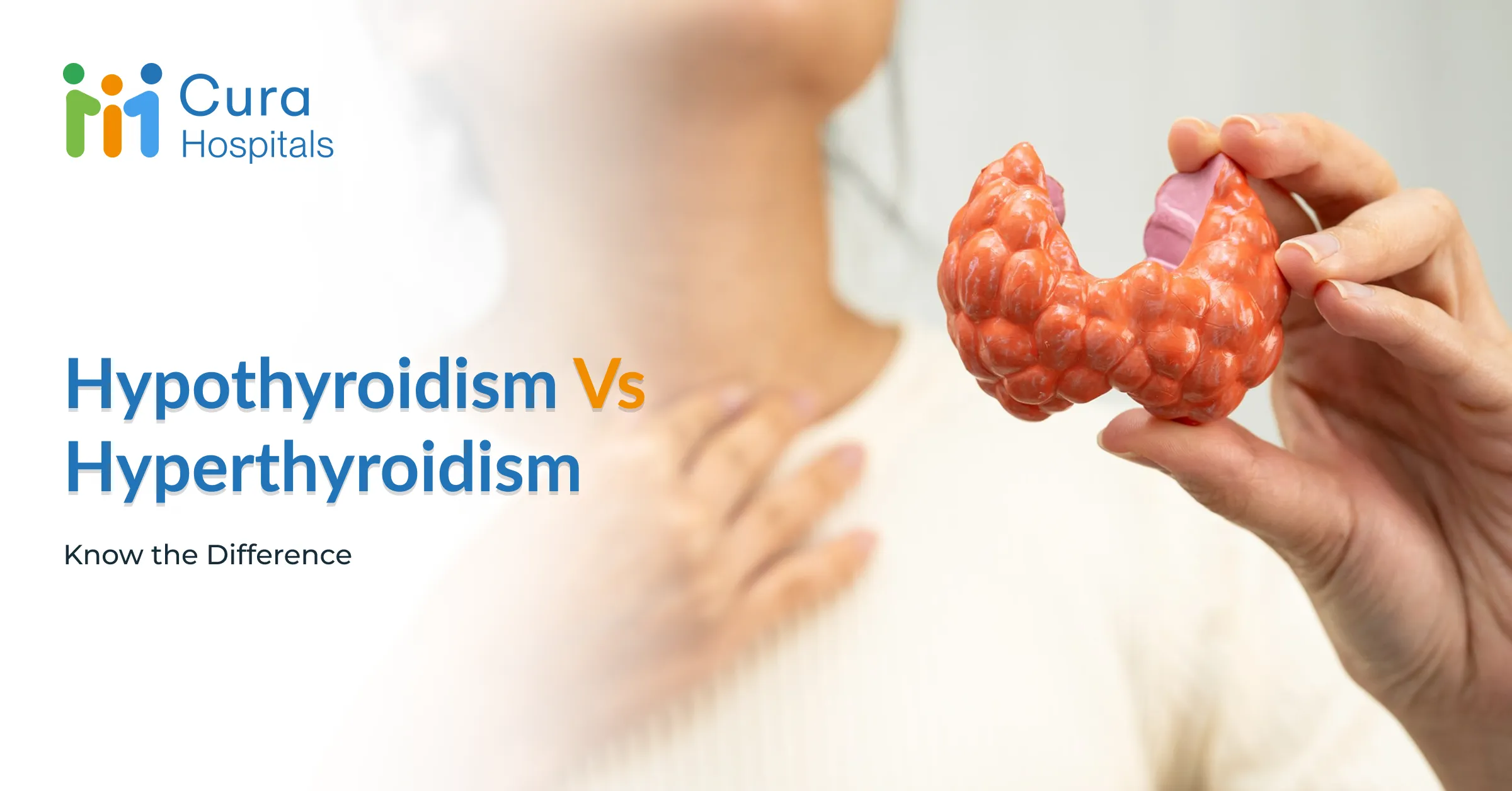
The main difference between hypothyroidism and hyperthyroidism is whether your thyroid is making too little or too much thyroid hormone. Hypothyroidism is also called as an underactive thyroid and hyperthyroidism is called an overactive thyroid.
To understand it in easy terms, firstly your thyroid is a small butterfly shaped gland in the front of your neck which makes hormones that control your heart rate, digestion, body temperature and how fast your body uses energy. When the hormone is less most of these functions slow down and when the hormone is more they speed up (Chaker et al., 2017; De Leo et al., 2016). Following is the table that explains the basic difference.
| Point | Hypothyroidism | Hyperthyroidism |
| Thyroid hormone | Too little | Too much |
| Also called | Underactive thyroid | Overactive thyroid |
| TSH on your report | Usually high | Usually low |
| Most common cause in adults | Hashimoto’s thyroiditis | Graves’ disease |
| How your body feels | Slow and heavy | Fast, restless and sometimes shaky |
| Usual treatment | One levothyroxine tablet daily | Depends on the cause |
What Is Thyrotoxicosis?
You may also see the word thyrotoxicosis on your report and it simply means there is too much thyroid hormone in your blood. Hyperthyroidism is one reason for it but it can also happen when an inflamed thyroid leaks out its stored hormone or when you take more thyroid tablets than needed (Ross et al., 2016), and since the treatment is different for each your doctor first finds the cause.
Hypothyroidism Symptoms vs Hyperthyroidism Symptoms
Thyroid problems can show up in many different ways and most people have only some of these symptoms. Following is the table that explains the common hypothyroidism symptoms and hyperthyroidism symptoms (Chaker et al., 2017; De Leo et al., 2016).
| Symptom | Hypothyroidism | Hyperthyroidism |
| Weight | Slight weight gain | Weight loss even when you are eating well |
| Heart rate | Slow pulse | Fast heartbeat or palpitations |
| Temperature | You feel cold easily | Often hot and sweaty |
| Energy | Tired and sluggish | Tired but restless |
| Digestion | Constipation | Frequent or loose stools |
| Mood | Low mood and slow thinking | Nervous, anxious or irritable |
| Hair and skin | Dry skin, coarse and thinning hair | Warm moist skin and fine hair which falls more |
| Periods | Heavy or irregular | Lighter and less often |
| Sleep | Sleepy in the day | Difficulty in sleeping |
| Muscles | Cramps and stiffness | Weakness and shaky hands |
These symptoms usually come slowly and it may take months before you realise something is not right.
Why Both Can Cause Tiredness and Hair Fall
Tiredness is there in both conditions and this is where most people get confused. With an underactive thyroid your body uses energy slowly so you feel heavy and sluggish, while with an overactive thyroid poor sleep, a racing heart and weak muscles leave you exhausted even though you feel restless (Chaker et al., 2017; De Leo et al., 2016).
Hair fall works in the same way because thyroid hormones control the hair growth cycle, so when the levels go too high or too low you shed more than usual and it is usually thinning all over the scalp rather than one bald patch (Cohen et al., 2023). However tiredness and hair fall can also happen because of low iron (anaemia), stress, poor sleep or vitamin deficiency, which is why a thyroid test is done to rule your thyroid in or out.
| Interesting Research – Thyroid Symptoms May Be Less Obvious With Age A study looked at 3049 people with hyperthyroidism and found that the older people had fewer of the typical symptoms than the younger ones (Boelaert et al., 2010). So an overactive thyroid can be missed more easily as you grow older, though this was a pattern seen in that group and it will not be true for every older person. |
How Does Thyroid Affect Weight and Heart Rate?
With hypothyroidism you may put on a little weight and some of it is just water that your body holds on to. Hyperthyroidism usually goes the other way because your body burns more energy, but you can also feel much hungrier and some people eat so much more that their weight does not drop at all. Once treatment brings your hormone levels back to normal, your weight depends mainly on your food, activity and general health (Chaker et al., 2017; De Leo et al., 2016).
With an overactive thyroid your heart can race even when you are sitting and some people describe it as a pounding or a flutter in the chest. Your doctor will also check for atrial fibrillation which is an irregular heartbeat, while an underactive thyroid usually slows your pulse down (De Leo et al., 2016).
| Thyroid Symptoms in Women Your thyroid can change your periods as hypothyroidism may cause heavy or irregular periods and hyperthyroidism may make them lighter and less often. It can also affect ovulation, which is the release of an egg from your ovary, so if your periods have changed or you are trying for a baby do tell your doctor (Chaker et al., 2017; De Leo et al., 2016). |
What Causes Hypothyroidism and Hyperthyroidism?
In many people the cause is autoimmune which means your own immune system starts attacking the thyroid. The two most common causes are Hashimoto’s thyroiditis and Graves’ disease and both are seen more in women and in people with a family history of thyroid problems.
Hashimoto’s slowly damages the thyroid over the years so it makes less hormone and this leads to hypothyroidism. In Graves’ disease the immune system makes antibodies which push the thyroid to make too much hormone and this leads to hyperthyroidism, and some people with Graves’ also get eye problems like irritation, puffiness or bulging eyes (De Leo et al., 2016).
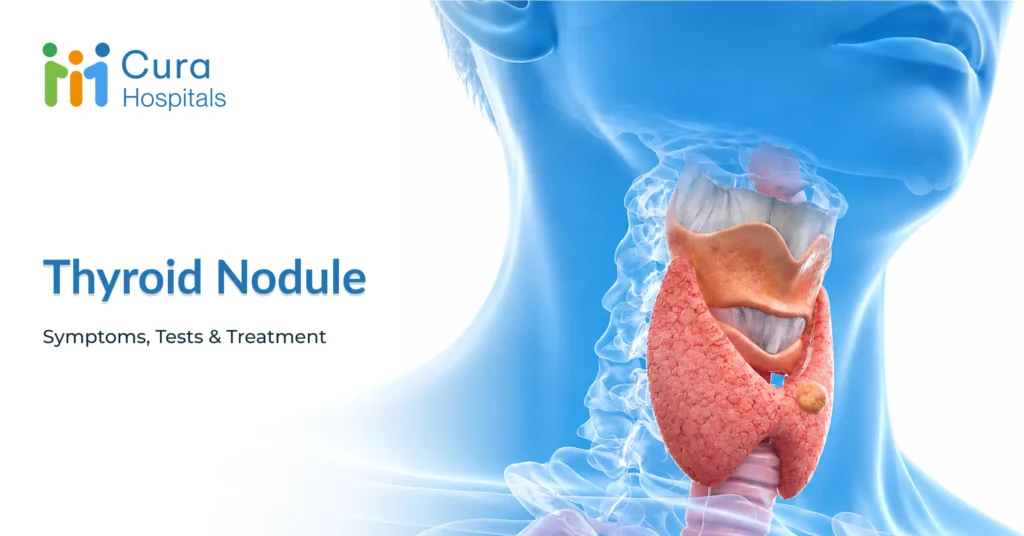
Sometimes the reason is a lump in the thyroid called a thyroid nodule which starts making extra hormone on its own. Following is the table that explains the other common causes (Chaker et al., 2017; Ross et al., 2016).
| Cause | What it can lead to |
| Thyroiditis (inflamed thyroid) | Too much hormone for a few weeks, sometimes followed by too little |
| Past thyroid surgery or radioactive iodine | Hypothyroidism, often long term |
| Higher dose of thyroid tablets than needed | Hormone levels go above normal |
| Medicines like amiodarone and lithium | Either of the two |
| Low iodine in the diet | Hypothyroidism in some parts of the world |
Which Tests Show Hypothyroidism vs Hyperthyroidism?
A simple blood test tells your doctor which condition you have.
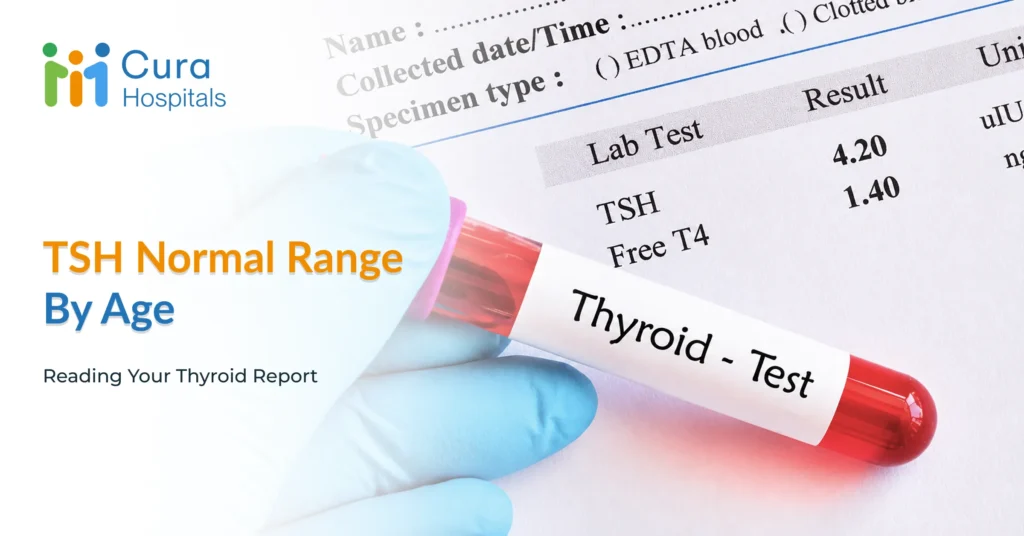
TSH is also called as thyroid stimulating hormone and it is made by the pituitary gland, which is a pea sized gland at the base of your brain that tells your thyroid how much hormone to make. The rule is opposite to what most people expect because when your thyroid hormone is low your TSH usually goes high, and when your thyroid hormone is high your TSH usually goes low.
Free T4 shows how much active thyroid hormone is in your blood and T3 is another thyroid hormone which is mostly checked when your doctor suspects hyperthyroidism (Koulouri et al., 2013). Following is the table that explains what the common results usually mean.
| TSH | Free T4 | What it usually means |
| High | Low | Hypothyroidism |
| High | Normal | Possible mild hypothyroidism |
| Low | High | Thyrotoxicosis, often hyperthyroidism |
| Low | Normal | Needs more checking, usually with T3 |
| Low or normal | Low | A rare pituitary problem which needs more tests |
If your TSH is high but your free T4 is normal it is called subclinical hypothyroidism and many people with it do not need tablets straight away.
These results are only a guide and your doctor will compare them with the normal range printed by your lab. Medicines, pregnancy, a recent illness and some pituitary problems can change the result, and biotin which many people take for hair and nails can give a misleading result in some tests (Koulouri et al., 2013; Soh and Aw, 2019).
Can Hypothyroidism Turn Into Hyperthyroidism?
Usually it does not, but in some cases your thyroid levels can swing from one side to the other.
Thyroiditis means your thyroid is inflamed and some types make the thyroid leak its stored hormone into the blood. So for a few weeks your levels go high, and once the stored hormone is used up they may drop and you may have a phase of hypothyroidism. In most people the thyroid comes back to normal but some do develop permanent hypothyroidism (Ross et al., 2016), and this is different from Graves’ disease because the thyroid is not making extra hormone, it is only leaking the old one.
If you take levothyroxine and the dose is higher than you need, your levels can also go too high and you may notice palpitations, poor sleep or weight loss. Do not change the dose yourself as your doctor will adjust it after looking at your blood test (Jonklaas et al., 2014).
In the same way some people develop hypothyroidism after radioactive iodine or thyroid surgery for an overactive thyroid and may need thyroid tablets for years together (Ross et al., 2016). This is an expected effect of the treatment and does not mean you have a new disease.
| Endocrinologist’s Insight “Many patients come to me sure that their tiredness is from an underactive thyroid and some of them turn out to have an overactive one. So I go by the report and not the symptoms alone. Before reading a TSH I always ask whether they take biotin, have been unwell recently or could be pregnant because all of these can change the result.” Dr. Manasa, Endocrinology, KMC Reg. No. 110274 |
Hypothyroidism Treatment
The most common treatment for hypothyroidism is levothyroxine, a tablet taken once a day to replace the hormone your thyroid is not able to make. It can take a few weeks to get the right dose so your doctor checks your TSH and how you are feeling, especially when you start or change the dose (Jonklaas et al., 2014).
Calcium and iron tablets can reduce how well levothyroxine is absorbed, so ask your doctor how much gap to keep between them. If you have permanent hypothyroidism you will usually need the tablet for life and your doctor will keep checking your TSH from time to time.
Hyperthyroidism Treatment
Hyperthyroidism treatment depends on the cause, your age, your symptoms and any other health problems you have. Following is the table that explains the common treatment options.
| Treatment | How it helps |
| Antithyroid tablets (carbimazole or methimazole) | Reduce the new hormone your thyroid makes. |
| Beta blockers | Control the fast heartbeat and shaky hands while the main treatment works. |
| Radioactive iodine | Slowly reduces the overactive thyroid tissue in selected patients. |
| Surgery | May be advised for some nodules, a large goitre or other reasons. |
Antithyroid tablets are often used for Graves’ disease and beta blockers are given for a short time depending on your situation. Radioactive iodine and surgery work well in some people but not for every cause, and radioactive iodine cannot be given in pregnancy or while breastfeeding (Ross et al., 2016; Joshi et al., 2026). If your high levels are from thyroiditis, antithyroid tablets usually do not help because the thyroid is leaking hormone and not making extra.
| Important Medication Safety Information In rare cases, antithyroid tablets can cause a sharp drop in white blood cells. If you are on these tablets and get a fever, sore throat or mouth ulcers, stop the tablet and get urgent medical help and a blood count done, and do not start it again till your doctor tells you (Joshi et al., 2026). |
Is Hyperthyroidism More Serious Than Hypothyroidism?
The honest answer depends on how much your hormone levels have changed, how long they have been abnormal and your other health problems.
An overactive thyroid puts strain on your heart and in some people it can lead to atrial fibrillation or heart failure, and it can also make your bones weak. Thyroid storm is a rare, life-threatening emergency linked to severe thyrotoxicosis and is diagnosed from symptoms as well as test results (De Leo et al., 2016; Ross et al., 2016).
An underactive thyroid can raise your cholesterol and when it is left untreated for long it can affect your heart and daily life, and very rarely severe untreated hypothyroidism can become life threatening (Chaker et al., 2017). Nevertheless most people never get these problems and early diagnosis and treatment make a big difference.
When Should You See a Doctor for Thyroid Symptoms?
You should see a doctor if you have any of the following:
- Tiredness that does not go away
- Weight gain or weight loss without a clear reason
- Palpitations or a pulse that feels unusually slow
- Sweating a lot or feeling cold all the time
- Hair thinning that keeps going on
- Changes in your periods
- A swelling in the front of your neck
- An abnormal thyroid blood test
- Thyroid symptoms during pregnancy
Go to the hospital emergency at once if you have chest pain, severe breathlessness, fainting or confusion, or a high fever with severe restlessness and a very fast heartbeat. A fever or sore throat while you are on antithyroid tablets also needs urgent attention because of the risk of a serious reaction to the medicine.
Thyroid Care at Cura Hospitals
At Cura Hospitals our General Medicine doctors diagnose and treat thyroid and other hormone problems. During your visit the doctor asks about your symptoms, past health problems, the medicines you take and any old thyroid reports, and then advises the right tests and explains what happens next.
Thyroid blood tests are done in our in-house lab and a thyroid profile is also part of many of our health packages. We have hospitals in Kammanahalli and Kanakapura Road, Bengaluru.
Feeling tired all the time, weight changes and more hair in your comb can be worrying, but thyroid problems are common and very treatable once they are diagnosed. If you are not feeling yourself, book an appointment and get your thyroid checked.
Have questions about your thyroid symptoms or report? Speak to our doctors at Cura Hospitals.
Contact details
Cura Hospitals, Kammanahalli: #1, Bethel St, HRBR Layout 2nd Block, Kalyan Nagar, Kammanahalli, Bengaluru, Karnataka 560043
Cura Hospitals, Kanakapura Road: No.18, Kanakapura Rd, Venkatareddy Layout, Doddakallasandra, Uttarahalli Hobli, Bengaluru, Karnataka 560062
Phone: +91 87480 30303 | Email: info@curahospitals.com | 24/7 emergency: +91 84312 41403
References
Boelaert, K., Torlinska, B., Holder, R.L. and Franklyn, J.A. (2010) ‘Older subjects with hyperthyroidism present with a paucity of symptoms and signs: a large cross-sectional study’, Journal of Clinical Endocrinology & Metabolism, 95(6), pp. 2715–2726.
Chaker, L., Bianco, A.C., Jonklaas, J. and Peeters, R.P. (2017) ‘Hypothyroidism’, The Lancet, 390(10101), pp. 1550–1562.
Cohen, B., Cadesky, A. and Jaggi, S. (2023) ‘Dermatologic manifestations of thyroid disease: a literature review’, Frontiers in Endocrinology, 14, 1167890.
De Leo, S., Lee, S.Y. and Braverman, L.E. (2016) ‘Hyperthyroidism’, The Lancet, 388(10047), pp. 906–918.
Jonklaas, J. et al. (2014) ‘Guidelines for the treatment of hypothyroidism: prepared by the American Thyroid Association Task Force on Thyroid Hormone Replacement’, Thyroid, 24(12), pp. 1670–1751.
Joshi, S. et al. (2026) ‘Management of hyperthyroidism in adults in India: Consensus statement of the Indian Thyroid Society’, Thyroid Research and Practice, 22(1), pp. 1–24.
Koulouri, O., Moran, C., Halsall, D., Chatterjee, K. and Gurnell, M. (2013) ‘Pitfalls in the measurement and interpretation of thyroid function tests’, Best Practice & Research Clinical Endocrinology & Metabolism, 27(6), pp. 745–762.
Ross, D.S. et al. (2016) ‘2016 American Thyroid Association Guidelines for Diagnosis and Management of Hyperthyroidism and Other Causes of Thyrotoxicosis’, Thyroid, 26(10), pp. 1343–1421.
Soh, S.B. and Aw, T.C. (2019) ‘Laboratory Testing in Thyroid Conditions – Pitfalls and Clinical Utility’, Annals of Laboratory Medicine, 39(1), pp. 3–14.
Unnikrishnan, A.G. et al. (2013) ‘Prevalence of hypothyroidism in adults: An epidemiological study in eight cities of India’, Indian Journal of Endocrinology and Metabolism, 17(4), pp. 647–652.
Media Center Health Concerns?
Our specialists at Cura Hospitals are here to help with screening, diagnosis, risk assessment, and personalized treatment plans tailored to your health needs.
Schedule A ConsultationFrequently Asked Questions
Yes you can. Weight changes are common but not everyone gets them, and some people only have tiredness, bowel changes or a fast heartbeat while some have hardly any symptoms, so your doctor looks at your symptoms and blood test together.
They can run in families but you can still get them without any family history. Hashimoto’s and Graves’ are seen more in some families, so tell your doctor if your parent, brother or sister has a thyroid problem (Chaker et al., 2017; De Leo et al., 2016).
Usually yes because a high TSH means your brain is pushing your thyroid to make more hormone. Your free T4 completes the picture and if it is still normal you may have subclinical or mild hypothyroidism.
Yes. An overactive thyroid can cause a fast heartbeat, shaky hands and poor sleep which can feel just like anxiety, so your doctor may advise a thyroid test, though there can be other reasons too.
Yes it can. You may notice dry or watery eyes and puffiness and some people get bulging eyes or double vision, so get it checked soon if you have new double vision or any change in your eyesight.
You can start with a General Medicine doctor or an endocrinologist, who is a doctor for hormone problems, and they will advise the tests and treatment you need.
It depends on your diagnosis. Permanent hypothyroidism usually needs levothyroxine for life, some people with Graves’ disease go into remission though it can come back, and thyroiditis often settles without long term tablets. Do not stop your thyroid tablets without speaking to your doctor, except in the medication safety situation explained above.