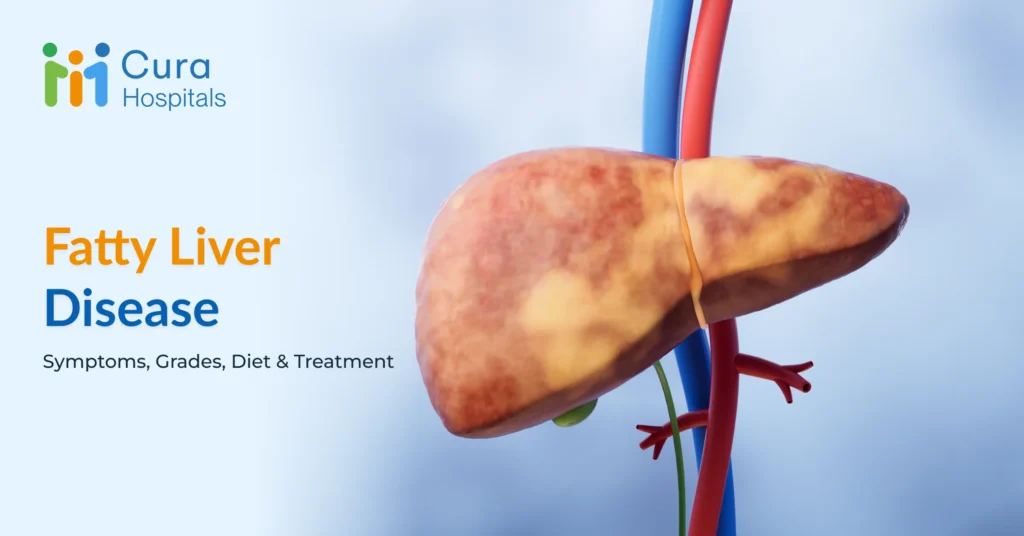
Fatty Liver Symptoms – Early Signs, Causes & When You Should See a Doctor


Most people with fatty liver have no symptoms, which is why it is usually found on a scan or blood test done for another reason.
When fatty liver symptoms do appear, they are vague: tiredness, a dull ache in the upper right abdomen, or a feeling of fullness.
Yellow eyes or skin, itching, swelling of the legs or belly, easy bruising and vomiting blood are signs of advanced liver disease and need prompt medical attention.
Normal liver enzymes do not rule out fatty liver, or even scarring (Rinella et al., 2023).
Common fatty liver causes are extra weight, type 2 diabetes, high triglycerides, high blood pressure and alcohol. It can also affect people of normal weight.
Fatty liver diagnosis uses blood tests, an ultrasound and a scarring risk score called FIB-4, sometimes followed by a FibroScan.
Many people first hear about fatty liver disease from a scan report when they were not unwell at all. Others come in worried about tiredness or an ache on the right side of the abdomen and ask whether fatty liver is the reason. The honest answer is that fatty liver symptoms are usually absent or vague, so symptoms alone cannot tell you.
This guide explains the early signs of fatty liver, the symptoms that point to more advanced liver disease, the common causes, how doctors diagnose it and when to see a doctor.
Questions about a liver function test result?
Does Fatty Liver Cause Symptoms?
Usually not, at least in the early years. The liver has no pain nerves inside it, and it can carry extra fat for a long time without complaining. This is why fatty liver is often called a silent condition. It is usually picked up when an ultrasound is done for another reason or when a health checkup shows raised liver enzymes.
Early Fatty Liver Symptoms
When there are symptoms of fatty liver disease, they are mild and easy to put down to something else.
- Tiredness or low energy that does not go away with rest
- A dull ache or a feeling of fullness in the upper right side of the abdomen
- Bloating or feeling full quickly after meals
- A larger waistline, even without much weight gain elsewhere
- Dark, velvety patches of skin on the neck or in the armpits, which are a sign of insulin resistance and often go with fatty liver
None of these is specific to fatty liver. Acidity, gallstones and many other conditions cause similar complaints, which is why tests matter more than guessing.
Symptoms of Advanced Liver Disease
Some people with fatty liver develop inflammation and then scarring over many years. When the liver is badly scarred (cirrhosis), different symptoms can appear, and these need a doctor’s attention.
- Yellow eyes or skin (jaundice)
- Dark urine or pale stools
- Itching all over the body
- Swelling of the ankles, legs or belly
- Easy bruising or bleeding
- Confusion, unusual sleepiness or changes in sleep
- Weight loss and muscle wasting
- Vomiting blood or passing black stools
Fatty Liver Causes Behind These Symptoms
The causes of fatty liver are mostly about how the body handles energy and sugar. The common ones are extra weight with fat around the waist, type 2 diabetes or prediabetes, high triglycerides, low HDL cholesterol and high blood pressure. PCOS, an underactive thyroid, sleep apnoea, some medicines and alcohol can also add to it, and it can occur in people of normal weight.
Fatty Liver Symptoms vs Other Liver and Gallbladder Problems
Several conditions cause tiredness, discomfort in the upper right abdomen or raised liver enzymes. Tests help to tell them apart.
| Condition | Typical clues | How it is separated |
| Fatty liver | Risk factors such as weight, diabetes or high triglycerides, and fat on the ultrasound | Ultrasound, and ruling out other causes |
| Viral hepatitis (B or C) | May cause tiredness and jaundice, sometimes no symptoms | Blood tests for hepatitis B and C |
| Alcohol-related liver disease | History of regular heavy drinking | History, and the pattern of liver enzymes |
| Gallstones | Pain in the upper right abdomen, often after a heavy or fatty meal | Ultrasound that shows stones. |
| Medicine-related liver injury | Enzymes rise after a new medicine or supplement | Medicine history, and recovery after stopping |
A person can have more than one of these at the same time, which is another reason to get a proper check.
Fatty Liver Diagnosis
Doctors usually combine several steps.
- History and examination. The doctor asks about weight, waist size, blood pressure, diabetes, alcohol and medicines.
- Blood tests. These include liver enzymes (ALT and AST), blood sugar, cholesterol and triglycerides, platelet count and tests for hepatitis B and C. Liver enzymes can be normal even in advanced disease (Rinella et al., 2023).
- Ultrasound of the abdomen. This shows fat in the liver and is often how fatty liver is first found. The scan result is described in grades, which we explain in our guide to fatty liver grades.
- FIB-4 score. This is worked out from age, AST, ALT and platelet count, and it estimates the chance of scarring. Guidance recommends it as the first step for people with fatty liver or its risk factors (Rinella et al., 2023).
- Further tests if the risk is not low. A FibroScan measures liver stiffness. Sometimes additional imaging services like an MRI or even a liver biopsy may be needed.
Who Should Be Checked Even Without Symptoms
Since fatty liver is silent, doctors suggest checking people who are at higher risk. This includes people with type 2 diabetes, obesity or a large waist, high triglycerides, high blood pressure, PCOS or sleep apnoea, a family history of liver disease, or raised liver enzymes on a past report. If you are in one of these groups, ask your doctor about a liver check at your next visit or health checkup.
| Doctor’s Insight “People are often surprised that fatty liver gave them no warning. That is exactly why we check for it in people with diabetes, weight gain or high triglycerides. A normal enzyme report does not close the question, and a simple scarring score can tell us whether more tests are needed.” DR. ABRAR MOHAMMED M.B.B.S, M.S, Orthopaedics Registered Medical Practitioner | KMC Registration No: 116389 |
When to See a Doctor
See a doctor if you have a scan or blood report that mentions fatty liver or raised liver enzymes, if you have lasting tiredness or discomfort in the upper right abdomen, or if you are in a higher-risk group. A general physician is a good first step, and a gastroenterologist or hepatologist can take over when the scarring risk is raised.
Go to an emergency department straight away if you vomit blood, pass black stools, become confused or very drowsy, or have yellow eyes or skin together with fever or severe abdominal pain.
Once fatty liver is confirmed, food is the main part of treatment, for which adhering to the fatty liver diet is extremely important.
Fatty Liver Care at Cura Hospitals
The gastroenterology department at Cura Hospitals provides liver disease management, including fatty liver disease, with regular monitoring and personalised care plans. The hospitals are in Kammanahalli and on Kanakapura Road, Bengaluru.
For appointments or general enquiries, reach out to the hospital.
Contact details
Cura Hospitals, Kammanahalli: #1, Bethel St, HRBR Layout 2nd Block, Kalyan Nagar, Kammanahalli, Bengaluru, Karnataka 560043
Cura Hospitals, Kanakapura Road: No.18, Kanakapura Rd, Venkatareddy Layout, Doddakallasandra, Uttarahalli Hobli, Bengaluru, Karnataka 560062
Phone: +91 87480 30303 | Email: info@curahospitals.com | 24/7 emergency: +91 84312 41403
This article is for general health education and is not a substitute for personal medical advice. Please speak to your treating doctor about your own symptoms and test results.
References
Dulai, P.S., Singh, S., Patel, J., Soni, M., Prokop, L.J., Younossi, Z., Sebastiani, G., Ekstedt, M., Hagstrom, H., Nasr, P., Stal, P., Wong, V.W.S., Kechagias, S., Hultcrantz, R. and Loomba, R. (2017) ‘Increased risk of mortality by fibrosis stage in nonalcoholic fatty liver disease: systematic review and meta-analysis’, Hepatology, 65(5), pp. 1557-1565.
Rinella, M.E., Neuschwander-Tetri, B.A., Siddiqui, M.S. et al. (2023) ‘AASLD practice guidance on the clinical assessment and management of nonalcoholic fatty liver disease’, Hepatology, 77(5), pp. 1797-1835.
Uncategorized Health Concerns?
Our specialists at Cura Hospitals are here to help with screening, diagnosis, risk assessment, and personalized treatment plans tailored to your health needs.
Schedule A ConsultationFrequently Asked Questions
Usually not. Some people feel a dull ache or fullness in the upper right abdomen, but many feel nothing. Pain in that area can also come from gallstones, acidity and other conditions, so it should be checked.
Often there are none. When there are, they are tiredness, a dull ache or fullness on the upper right side, bloating and a larger waistline. Dark patches on the neck or armpits can point to insulin resistance.
Yes. Liver enzymes can be normal in fatty liver, and even in advanced liver disease, so doctors also use an ultrasound and a scarring risk score.
Blood tests, an ultrasound and a FIB-4 score, followed by a FibroScan or other tests when the risk of scarring is not low. A biopsy is needed only in some cases.
Grade 1 fatty liver usually causes no symptoms. It is typically found on a scan. Our guide to fatty liver grades explains what each grade means.
It can in some people, but tiredness has many other causes, including poor sleep, thyroid problems, anaemia and diabetes. Your doctor can look into all of these together.
A general physician is a good first step. A gastroenterologist or hepatologist sees patients when the scarring risk is raised or the liver tests stay abnormal.