
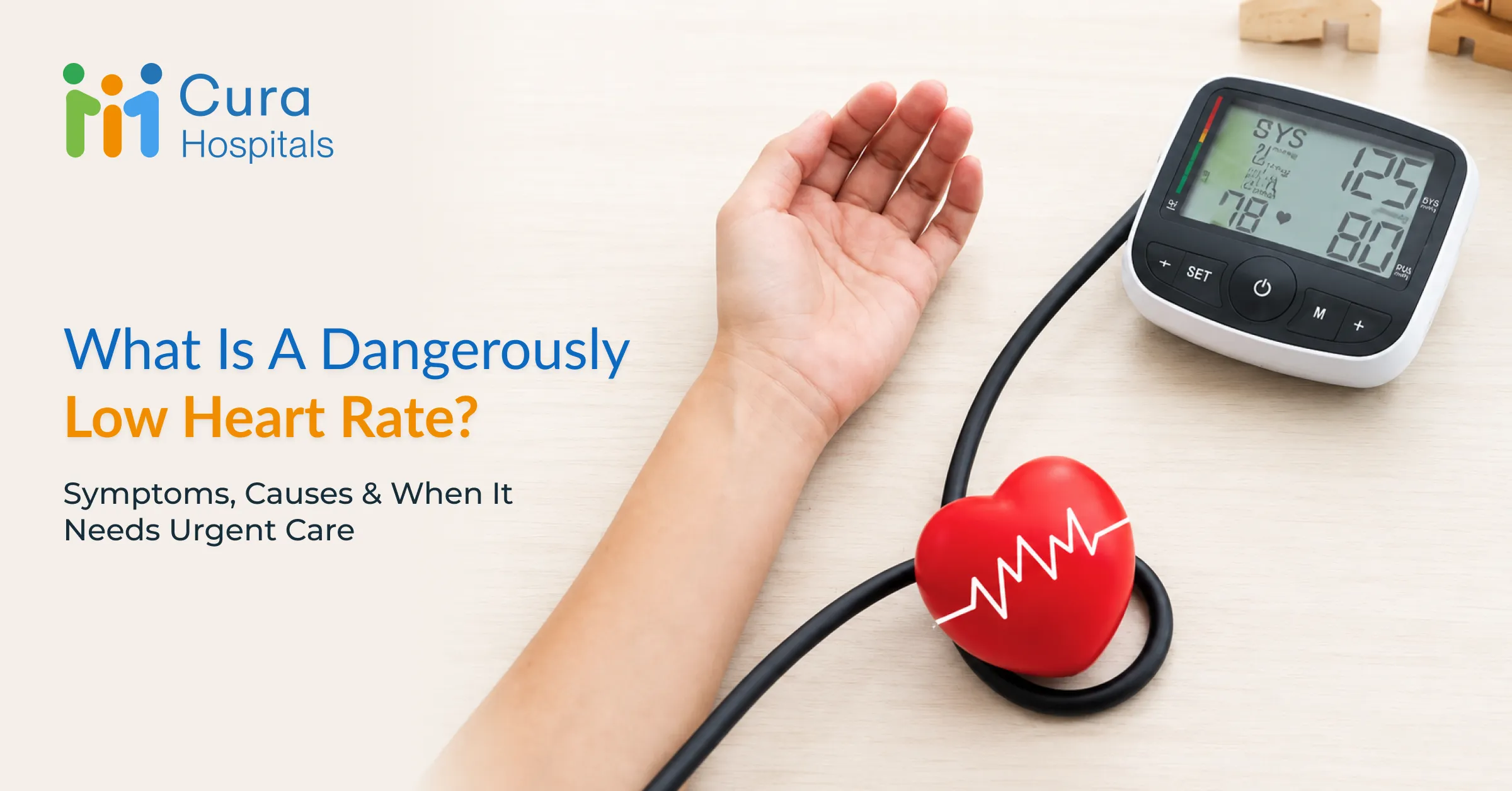
What Is a Dangerously Low Heart Rate? Symptoms, Causes & When It Needs Urgent Care
 Cura Hospitals

Most people worry about their heart beating too fast. A racing pulse after a stressful moment or an intense workout is something almost everyone has felt. But a heart that beats too slowly can be just as important to pay attention to, and in some cases, more so. The tricky part is that a slow heart rate does not always mean something is wrong. Knowing when it is normal and when it is not is what this guide is here to help with.
What is a Low Heart Rate?
A normal resting heart rate for an adult sits somewhere between 60 and 100 beats per minute. When the heart beats fewer than 60 times per minute at rest, it is called bradycardia. The word sounds alarming, but the number alone does not tell the whole story.
For many people, a resting heart rate in the 50s is perfectly fine and causes no symptoms whatsoever. For others, even a rate that is technically within the normal range can be too slow for their body to handle comfortably. What matters most is whether the heart is pumping enough blood to meet the body’s needs, not the number on a smartwatch.
What is a Dangerously Low Heart Rate?
There is no single cutoff that applies to everyone, but a resting heart rate consistently below 40 beats per minute is generally considered a point where the heart may not be circulating blood efficiently enough, especially if it is accompanied by symptoms.
A heart rate in the 30s or lower, particularly when it causes dizziness, fainting, chest pain, or breathlessness, is a situation that warrants prompt medical attention. Similarly, a sudden drop in heart rate, even from a previously normal level, can be more concerning than a chronically slow rate that the body has adjusted to over time.
Athlete vs Non-Athlete Low Pulse
One of the most common reasons for a naturally low resting heart rate is regular physical training. Endurance athletes like runners, cyclists, and swimmers often have resting heart rates well below 60, sometimes even in the 40s, and this is entirely normal for them. Their hearts are stronger and more efficient, so fewer beats per minute are needed to move the same amount of blood around the body.
This is why context matters so much when looking at a low pulse. A 45-year-old marathon runner with a resting rate of 48 beats per minute and no symptoms is in a very different situation from a 65-year-old with no history of exercise who notices their pulse has dropped to 48 and they feel lightheaded every time they stand up. The number is the same. The significance is not great.
Symptoms That Make It Concerning
A slow heart rate becomes a concern when the body starts showing signs that it is not getting enough blood flow. Low heart rate symptoms to watch for include:
- Dizziness or lightheadedness, particularly when standing up or exerting yourself
- Fainting or near-fainting episodes
- Unusual tiredness that does not improve with rest
- Shortness of breath during activities that never used to cause it
- Chest discomfort or a feeling of pressure
- Difficulty concentrating or a foggy, confused feeling
- Feeling your heart flutter, pause, or beat irregularly
Any of these alongside a slow pulse deserves proper evaluation rather than a wait-and-see approach.
Causes: Medicines, Thyroid, Rhythm Issues, Ageing
Understanding what causes a low heart rate helps make sense of why it can vary so much from person to person. The most common reasons include:
Medications: Several commonly prescribed medicines can slow the heart rate as a side effect. Beta-blockers used for blood pressure or heart conditions, certain calcium channel blockers, digoxin, and even some antidepressants or antiarrhythmic drugs can all bring the heart rate down. If your pulse has slowed around the time a new medication was started, it is worth mentioning this to your doctor.
Thyroid problems: An underactive thyroid, or hypothyroidism, slows down many of the body’s functions, including the heart rate. It is a surprisingly common and frequently missed cause of bradycardia, particularly in older adults and women.
Heart rhythm issues: The heart’s electrical system controls how and when it beats. Conditions like sick sinus syndrome, where the heart’s natural pacemaker misfires, or heart block, where electrical signals between the upper and lower chambers are delayed or interrupted, can cause a persistently slow or irregular heart rate.
Ageing: As the heart ages, its electrical pathways can gradually become less efficient. This is one reason why bradycardia is more commonly seen in older adults, even without any other obvious cause.
Other causes include sleep apnoea, electrolyte imbalances, and in some cases, a previous heart attack that has affected the heart’s conduction system.
When Urgent Care is Needed
Bradycardia symptoms that need immediate attention include fainting or loss of consciousness, severe chest pain, sudden breathlessness at rest, or a heart rate that drops suddenly and stays very low. These symptoms together suggest the heart may not be maintaining adequate circulation, and waiting to see how things develop is not the right approach.
If someone around you faints and has a very slow or weak pulse, or if they are confused and unresponsive, call for emergency help immediately. These are not symptoms to manage at home or monitor overnight.
Tests a Cardiologist May Advise
When you see a cardiologist for a low heart rate, the evaluation usually starts with an ECG, which captures a snapshot of the heart’s electrical activity and can pick up rhythm abnormalities right away. If the issue is not constant, a Holter monitor worn for 24 to 48 hours, or sometimes longer, records the heart’s activity over time to catch irregularities that a standard ECG might miss.
Blood tests to check thyroid function, electrolytes, and kidney function are usually part of the workup. In some cases, an echocardiogram is advised to look at the structure and pumping function of the heart. If symptoms occur only during activity, an exercise stress test may be recommended to see how the heart rate responds to physical effort.
Treatment Depends on Cause
There is no single treatment for a dangerously low heart rate because the right approach depends entirely on what is causing it. If a medication is responsible, adjusting the dose or switching to an alternative may be all that is needed. If an underactive thyroid is behind it, treating the thyroid condition often resolves the bradycardia as well.
For rhythm problems that are structural, such as sick sinus syndrome or significant heart block, a pacemaker is often the recommended solution. A pacemaker is a small device placed under the skin near the collarbone that monitors the heart’s rate and sends an electrical signal whenever the heart beats too slowly, keeping the rhythm steady and safe.
Not every case of bradycardia needs treatment. If the slow rate is causing no symptoms and investigations show no concerning cause, monitoring over time with regular check-ups may be all that is required. However, it is always advisable to visit a cardiologist about related concerns.
When to Visit Cura’s Cardiology Department
You do not need to wait for a fainting episode before getting a slow pulse checked. Reach out to Cura’s cardiology team if:
- Your resting heart rate is consistently below 50 and you are not an athlete
- You feel dizzy, tired, or short of breath without a clear explanation
- You have fainted or felt close to fainting on more than one occasion
- You have been told you have a low heart rate during a routine check-up and want it properly evaluated
- You are on medications that may be affecting your heart rate
- You have a family history of heart rhythm problems
At Cura Multispeciality Hospitals, our cardiology team takes a thorough, personalised approach to heart rhythm concerns, using the right combination of clinical assessment and diagnostic tools to find answers quickly and guide you toward the most appropriate next step.
Book your consultation with our cardiology team at Cura today.
Media Center Health Concerns?
Our specialists at Cura Hospitals are here to help with screening, diagnosis, risk assessment, and personalized treatment plans tailored to your health needs.
Schedule A ConsultationFrequently Asked Questions
Not always. A low heart rate is only a problem if it is causing symptoms or if it is linked to an underlying condition. Many fit and active people have resting heart rates below 60 with no issues at all. The key question is always whether the body is getting enough blood flow, not just what the number says.
It depends on what is causing it. If a medication is responsible, adjusting the dose often helps. If an underactive thyroid is behind it, treating the thyroid usually brings the heart rate back up. For structural rhythm problems that cause significant symptoms, a pacemaker may be recommended. If there is no underlying cause and no symptoms, no treatment may be needed at all.
For a regular exerciser or athlete, a resting heart rate of 45 is completely normal and not a cause for concern. For someone who is not physically active and is also feeling tired, dizzy, or short of breath, a rate of 45 deserves a check-up to rule out an underlying cause. The number matters less than how you feel alongside it.
Common causes include certain medications like beta-blockers, an underactive thyroid, heart rhythm disorders such as sick sinus syndrome or heart block, electrolyte imbalances, sleep apnoea, and natural changes in the heart’s electrical system that come with age. In healthy, active individuals, regular exercise is also a very common reason for a naturally low resting heart rate.
A resting heart rate consistently below 40 beats per minute is generally where doctors begin to pay close attention, especially if it comes with symptoms. A rate in the 30s or lower, or any sudden unexplained drop in heart rate with dizziness, chest pain, or fainting, should be treated as urgent and evaluated without delay.
Related Blogs
Kidney Stone Size Guide: Can It Pass Naturally, or Does It Need RIRS, URS, or PCNL?

Leg Pain, Swelling or a Non-Healing Wound: Vascular Surgeon, Orthopaedic Doctor or Diabetologist?