Your Health Check Report Is Abnormal. Which Doctor Should You Consult Next?

 Cura Hospitals

Opening an annual health checkup report only to find highlighted rows, bold text, or numbers sitting outside the normal range can bring on a wave of anxiety almost instantly. It happens more often than you might think. You feel completely fine, and yet your lab panel flags something off in your blood sugar, cholesterol, liver enzymes, or blood counts.
Before typing your symptoms into a search bar, take a breath. An out-of-range value on a routine full-body checkup is rarely an emergency in itself. Most of the time, it is simply a signal pointing to where your body could use a little more attention.
What follows is a guide to making sense of an abnormal health check report, telling urgent issues apart from simple follow-ups, and knowing exactly which specialist to see next.
Do Not Panic: Identifying Urgent vs. Non-Urgent Results
The first and most important step when reading test results is working out whether the report calls for routine scheduling or immediate medical attention.
Non-urgent findings, suited to a routine consultation:
Most abnormal findings on a health check fall here. These usually reflect gradual changes in the body that respond well to structured medical guidance over time.
- Mildly elevated blood sugar or HbA1c in the prediabetic range
- Slightly elevated LDL (“bad”) cholesterol or triglycerides
- Borderline thyroid parameters (TSH) without significant physical complaints
- Mildly elevated liver enzymes (SGOT/SGPT), often linked to fatty liver
- Small variations in haemoglobin levels or vitamin deficiencies (Vitamin D/B12)
Red flags that call for urgent or immediate evaluation:
Some lab values, particularly when paired with physical symptoms, point to something acute that should not wait for a routine appointment. Head to an emergency department or seek urgent care if your report comes with any of the following.
- Severe anaemia (haemoglobin under 7 g/dL), extremely high blood glucose (above 300 to 400 mg/dL with confusion or vomiting), or critical electrolyte imbalances
- An ECG showing acute ischaemic changes, such as ST-segment elevation or dangerous arrhythmias, especially alongside chest pain, jaw tightness, or breathlessness
- Acute yellowing of the eyes or skin, severe abdominal pain, a sudden drop in urine output, or unexplained high fever
Start with a General Physician When Unsure
If your health check report has several mild flags scattered across different sections, for instance, a bit of elevated cholesterol or borderline liver enzymes and low vitamin D, you do not need to book three separate specialists straight away.
An internal medicine specialist or general physician is usually the right place to begin. Rather than looking at each organ in isolation, a general physician reviews your whole health profile together, weighing how lifestyle, stress, family history, and diet connect to what shows up in your blood markers.
They can manage mild to moderate imbalances directly, order any confirmatory tests that are needed, and refer you to a sub-specialist only once targeted care actually becomes necessary. This is often the most practical answer to which doctor to consult for full-body check-up results that raise more than one minor flag at once.
High Sugar or HbA1c: Who Should You See?
If your report shows high fasting glucose, high postprandial sugar, or an elevated HbA1c (a rough 3-month average of your blood sugar), it usually points to insulin resistance or diabetes developing.
| Test Marker | Typical Threshold | Primary Specialist to Consult |
| HbA1c 5.7% to 6.4% | Prediabetes range | General Physician or Diabetologist, for lifestyle modification and monitoring |
| HbA1c 6.5% or higher | Diabetes range | Diabetologist or endocrinologist, for tailored medication and dietary planning |
| Uncontrolled / complex sugar | Very high sugars despite basic medication | Endocrinologist: a specialist in hormone systems and metabolic health |
Abnormal Cholesterol or ECG: Who Should You See?
Heart-related markers usually turn up under the lipid profile and ECG sections of a report.
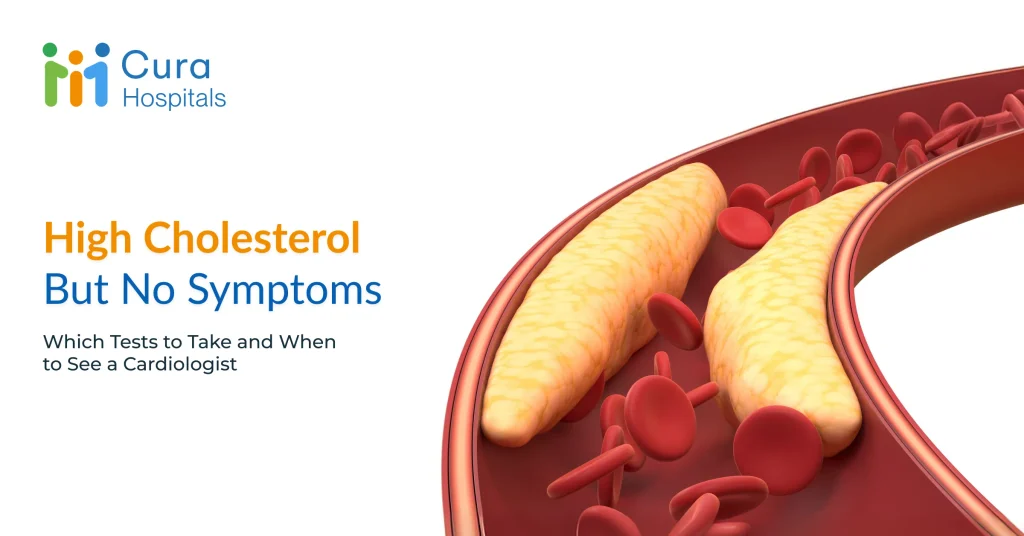
For high total cholesterol, LDL, or triglycerides, a general physician or cardiologist is a reasonable starting point. If LDL cholesterol comes in above 190 mg/dL, or there is a strong family history of early heart disease, a cardiologist can carry out a proper cardiovascular risk assessment.
Where the ECG or TMT notes something like ST-T changes, sinus bradycardia or tachycardia, or ischaemic changes, it is worth seeing a cardiologist directly, since they can determine whether the finding is a normal variation or something that needs an echocardiogram or coronary angiogram to clarify further.
Liver and Kidney Abnormalities: Who to See?
Routine screening panels commonly include a Liver Function Test (LFT) and a Kidney Function Test (KFT/RFT).
Concerning the liver, mildly elevated SGOT or SGPT is commonly tied to grade 1 or 2 fatty liver disease, a mild medication side effect, or recent alcohol intake, and a general physician or gastroenterologist can guide the lifestyle changes and ultrasound checks that follow. Marked jaundice or persistently high bilirubin is a different matter and warrants a gastroenterologist or hepatologist, who can look into causes such as gallstones, hepatitis, or a biliary obstruction.
On the kidney side, high uric acid can lead to gout or joint pain and is generally managed by a general physician or rheumatologist. Elevated creatinine or a reduced eGFR points to lower kidney filtration efficiency, and this is where a nephrologist should get involved to help prevent any further loss of kidney function.
Thyroid and Blood-Count Abnormalities: Who to See?
For the thyroid panel (TSH, free T3, and free T4), a high TSH, suggesting hypothyroidism, or a low TSH, suggesting hyperthyroidism, reflects a shift in your baseline metabolism. Mild hypothyroidism is often managed by a general physician, while more complex cases, nodules, or hyperthyroidism are better handled by an endocrinologist.
For the Complete Blood Count (CBC), low haemoglobin or red blood cells point to possible anaemia, and a general physician can work out whether it stems from iron deficiency, vitamin B12 deficiency, or blood loss; severe or unexplained anaemia may need a haematologist. A temporary rise in white blood cells often just reflects a viral or bacterial infection running its course, but a persistent, unexplained elevation, or a very low platelet count, is worth having reviewed by an internal medicine specialist or haematologist.
What Records to Carry to Your Doctor’s Consultation
Coming prepared genuinely changes the quality of the consultation. Doctors make better decisions when they can compare your current numbers against your health history rather than looking at a single report in isolation.
- Your current health checkup report, the full digital or printed set, not just the summary page
- Past test reports from the last 1 to 3 years, since a stable elevated value across years is far less concerning than a sudden spike over 6 months
- A current medication list, including prescription drugs, blood pressure tablets, supplements, over-the-counter vitamins, or herbal remedies
- A symptom log noting any mild, subtle changes recently, fatigue, sleep changes, digestive shifts, or unexplained weight change
Quick Reference: Abnormal Result to Specialist
Here’s a snapshot of common abnormal findings and which specialist typically handles each one.
| Abnormal Finding | Typical Cause | Specialist to Consult |
| HbA1c 5.7% to 6.4% | Prediabetes | General Physician or Diabetologist |
| HbA1c 6.5% or higher, uncontrolled sugar | Diabetes / insulin resistance | Diabetologist or Endocrinologist |
| Elevated LDL, total cholesterol, or triglycerides | Dyslipidaemia | General Physician or Cardiologist (Cardiologist directly if LDL > 190 mg/dL or strong family history) |
| Abnormal ECG or TMT (ST-T changes, arrhythmia, ischaemic changes) | Possible cardiac involvement | Cardiologist |
| Mildly elevated SGOT/SGPT | Fatty liver, medication effect, alcohol intake | General Physician or Gastroenterologist |
| Marked jaundice or high bilirubin | Gallstones, hepatitis, biliary obstruction | Gastroenterologist or Hepatologist |
| High uric acid | Gout, joint pain | General Physician or Rheumatologist |
| Elevated creatinine or reduced eGFR | Reduced kidney filtration | Nephrologist |
| High or low TSH | Hypothyroidism or hyperthyroidism | General Physician (mild) or Endocrinologist (complex/nodules) |
| Low haemoglobin | Anaemia (iron, B12, or blood loss) | General Physician, or Haematologist if severe/unexplained |
| Persistent abnormal WBC or very low platelets | Infection or blood disorder | Internal Medicine Specialist or Haematologist |
Book a Report-Review Consultation at Cura Hospitals
An abnormal health report is not a reason to panic. It is an opportunity to take control of your long-term wellness before small issues become larger ones. Early evaluation allows for simple interventions that can reverse or manage many health risks well before they turn serious.
At Cura Multispeciality Hospitals, our team of experienced general physicians, diabetologists, cardiologists, gastroenterologists, and endocrinologists works together under one roof. Whether you are looking at health checkup packages in Bangalore for the first time or need specialist guidance for a specific abnormal finding, our clinical team is here to support you.
Schedule Your Health Report Review at Cura Hospitals
Call Us: +91 87480 30303 | 24/7 Emergency: +91 84312 41403
Locations: Kammanahalli & Kanakapura Road, Bengaluru
Media Center Health Concerns?
Our specialists at Cura Hospitals are here to help with screening, diagnosis, risk assessment, and personalized treatment plans tailored to your health needs.
Schedule A ConsultationFrequently Asked Questions
See a doctor promptly if abnormal values come with symptoms like chest pain, fatigue, jaundice, swelling, or fever. Even without symptoms, follow up rather than ignore it.
A general physician is usually the best starting point, assessing your full health profile and referring you to a specialist only when needed.
It means a result falls outside the standard reference range, not that the disease is confirmed. It simply flags something worth a closer look.
Common tests include a CBC, lipid profile, LFT/KFT, HbA1c, thyroid profile, ECG, urine analysis, and imaging like X-rays or ultrasounds when needed.
A complete blood count, lipid profile, liver function test, kidney function test, and blood sugar/HbA1c.
Related Blogs

Kidney Stone Size Guide: Can It Pass Naturally, or Does It Need RIRS, URS, or PCNL?

Leg Pain, Swelling or a Non-Healing Wound: Vascular Surgeon, Orthopaedic Doctor or Diabetologist?