Subclinical Hypothyroidism: Meaning, Symptoms and When Treatment Is Needed


Key Takeaways
Subclinical hypothyroidism means your TSH is above the usual range but your free T4 is still normal, so it is a mild form of an underactive thyroid.
Most people with subclinical hypothyroidism have no symptoms or only mild symptoms like tiredness, and it is usually found on a routine blood test.
The test is usually repeated after 6 to 12 weeks because in many people the TSH comes back to normal on its own.
Subclinical hypothyroidism treatment is not needed for everyone and it depends on your TSH level, age, symptoms, antibodies and whether you are pregnant or planning pregnancy.
Thyroid in pregnancy needs closer attention and your doctor may start treatment at a lower TSH level.
Never start or stop thyroid tablets on your own without your doctor’s supervision.
Contact your doctor at once if you are pregnant and your thyroid report comes abnormal.
Subclinical hypothyroidism is a term that most people see for the first time when their routine health check shows a TSH which is a little above normal while the rest of the report looks fine, and with it being found in around 3 to 15 out of every 100 adults (Biondi et al., 2019) there are many families where someone has been told they have a thyroid problem without really understanding what it means.
Usually the first thing people want to know is whether they will have to take tablets for life. Some people start worrying as soon as they see the word hypothyroidism on their report and some others ignore it because they feel completely fine, but what you should do depends on how high your TSH is, your age and whether you are pregnant or planning a baby.
In this blog we explain what subclinical hypothyroidism means, its symptoms and causes, how it is diagnosed, when subclinical hypothyroidism treatment is needed, what it means for thyroid in pregnancy and how Cura Hospitals can help you.
Has your report shown a slightly high TSH? Get it reviewed by our doctors.
What Is Subclinical Hypothyroidism?
Subclinical hypothyroidism is a condition in which your TSH is higher than the normal range but your free T4, which is the main thyroid hormone, is still normal.
To understand it in easy terms, you should firstly know that TSH is the signal your brain sends to push your thyroid to make hormone. When your thyroid starts becoming a little slow, your brain pushes it harder by making more TSH and because of this extra push the thyroid is still able to keep your T4 in the normal range. So the problem shows up first in your TSH and not in your T4.
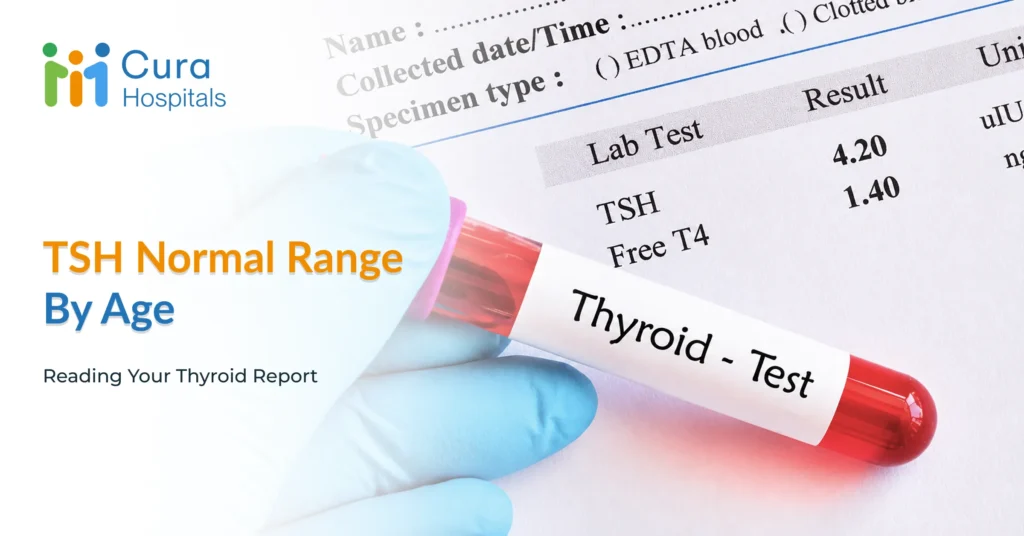
For example if your report shows a TSH of 6.5 mIU/L, which is above the usual TSH normal range, and your free T4 is normal, it is usually called subclinical hypothyroidism.
Subclinical Hypothyroidism Symptoms
Most people with subclinical hypothyroidism do not have any symptoms and it is found only when a blood test is done for some other reason. When symptoms are there, they are usually mild and similar to the symptoms of an underactive thyroid. Following is the table that explains the common symptoms and what you may notice.
| Symptom | What you may notice |
| Tiredness | You feel tired even after a full night’s sleep |
| Feeling cold | You feel colder than people around you |
| Weight | Slight weight gain without much change in your food |
| Skin and hair | Dry skin and some hair thinning |
| Mood | Feeling low or finding it hard to concentrate |
| Periods | Periods may become heavier or irregular |
These symptoms are very common and can also happen because of stress, poor sleep, low iron or vitamin deficiency. So having these symptoms does not always mean that your thyroid is the reason, and this is something that many people get confused about.
What Causes Subclinical Hypothyroidism?
The most common cause of subclinical hypothyroidism is Hashimoto’s thyroiditis, where your immune system slowly attacks the thyroid. An anti-TPO antibody blood test can support this diagnosis, but your doctor also checks your other results and medical history. Following is the table that explains the other common causes.
| Cause | What it usually means for you |
| Hashimoto’s thyroiditis | Your thyroid may become slower over the years so your doctor keeps a watch on your TSH. |
| Recovery from an illness | TSH can go up for a short time after a serious illness and usually settles on its own. |
| Low dose of thyroid tablets | If you already take thyroid tablets your dose may need to be adjusted. |
| After thyroid surgery or radioactive iodine | Part of your thyroid may not be working so TSH goes up. |
| Some medicines | Medicines like amiodarone and lithium can affect your thyroid. |
Sometimes more than one reason is there at the same time, so your doctor looks at your full history and not only one report.
How Is Subclinical Hypothyroidism Diagnosed?
Subclinical hypothyroidism is diagnosed with a blood test for TSH and free T4. Nevertheless one report is not enough because TSH can go up for a short time for many reasons, so your doctor will usually repeat the test after 6 to 12 weeks before calling it subclinical hypothyroidism (Pearce et al., 2013).
Your doctor may also check anti-TPO antibodies. If these are positive, it means the cause is usually Hashimoto’s and the chance of your thyroid becoming more underactive later is higher.
Does Subclinical Hypothyroidism Turn Into Hypothyroidism?
Not always. In many people the TSH stays almost the same for years and in some people it even comes back to normal without any treatment. But in others the TSH keeps going up slowly and one day the free T4 also becomes low, and then it is called overt hypothyroidism.
This is more likely to happen if your TSH is already above 10 or your anti-TPO antibodies are positive (Pearce et al., 2013). So even if your doctor says you do not need tablets right now, do not skip your follow up tests, and your doctor will tell you how often to repeat them.
Subclinical Hypothyroidism Treatment: When Is It Needed?
The honest answer to whether you need subclinical hypothyroidism treatment depends on your TSH level, your age, how you are feeling, your antibodies and whether you are pregnant or trying for a baby. Following is the table that explains what your doctor usually does in different situations.
| Situation | What your doctor usually does |
| TSH above 10 | Your doctor will usually think about starting levothyroxine |
| TSH between the upper limit and 10 with no symptoms | Usually no tablets are given and the test is repeated every 6 to 12 months |
| TSH between the upper limit and 10 with symptoms | Your doctor may try tablets for a few months to see if you feel better |
| Pregnant or planning pregnancy | Treatment is decided individually. Mild TSH changes do not always need tablets, especially if detected later in pregnancy |
| Age above 65 to 70 | Usually only monitoring is done as a slightly high TSH can be normal at this age |
If you do need treatment, levothyroxine is a small tablet taken once a day on an empty stomach usually in the morning. Your doctor will check your TSH again after 6 to 8 weeks and change the dose if needed.
| Interesting Research – Tablets May Not Help Older Adults A large study called the TRUST trial looked at 737 adults aged 65 and above with subclinical hypothyroidism. Those who took levothyroxine did not feel any better in terms of tiredness or other thyroid symptoms than those who took a dummy tablet (Stott et al., 2017). This is one reason why doctors usually do not start tablets in older people with only a slightly high TSH. |
Thyroid in Pregnancy and Subclinical Hypothyroidism
Thyroid in pregnancy needs more care because your baby depends on your thyroid hormone in the first few months for the growth of the brain. During pregnancy the TSH limits are also different and your doctor checks them trimester wise.
In pregnancy, treatment depends on how high your TSH is and when the problem is found. A TSH above 10 mIU/L needs treatment, while milder changes need individual assessment (Korevaar et al., 2026). If you are planning pregnancy and already know you have subclinical hypothyroidism, get your TSH checked before you conceive and again as soon as your pregnancy is confirmed.
| Endocrinologist’s Insight “The first question most patients ask me is whether they will now need thyroid tablets for life. For most people with a mildly high TSH the answer is no, and we simply repeat the test after a few weeks. But if a woman is planning a baby or her antibodies are positive, we review her tests carefully and discuss whether earlier treatment is needed.” Dr. Manasa, Endocrinology, KMC Reg. No. 110274 |
When Should You See a Doctor?
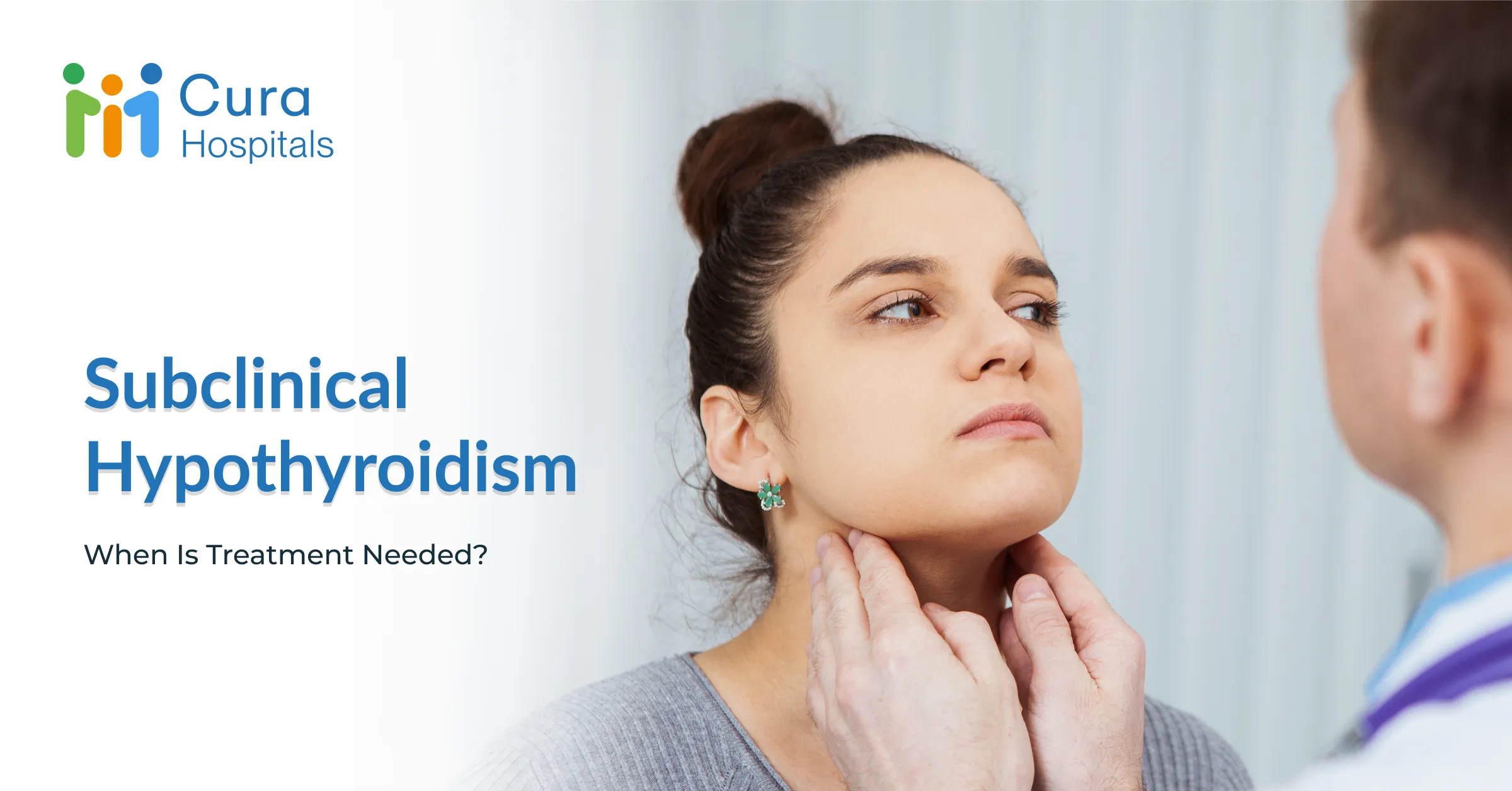
You should see a doctor if your report shows a high TSH, if you have symptoms like ongoing tiredness, weight gain, feeling cold or changes in your periods, or if you have a family history of thyroid disease.
Do not wait for your next routine check if you are pregnant or trying for a baby, if you already take thyroid tablets and your report has suddenly changed, or if you notice a swelling in the front of your neck.
Thyroid Care at Cura Hospitals
At Cura Hospitals your TSH, free T4 and thyroid antibodies can be checked in our in-house lab, and our General Medicine doctors look at your symptoms, age and pregnancy plans before telling you whether you need tablets or only regular follow up. A thyroid profile is also part of many of our health packages.
We have hospitals in Kammanahalli and Kanakapura Road, Bengaluru.
Want to know if you need treatment for a high TSH? Speak to our doctors.
References
Korevaar, T.I.M. et al. (2026) ‘American Thyroid Association 2026 Guidelines for Thyroid Disease in Preconception, Pregnancy, and Postpartum’, Thyroid, 36(5), pp. 481–544.
Biondi, B., Cappola, A.R. and Cooper, D.S. (2019) ‘Subclinical Hypothyroidism: A Review’, JAMA, 322(2), pp. 153–160.
Pearce, S.H.S. et al. (2013) ‘2013 ETA Guideline: Management of Subclinical Hypothyroidism’, European Thyroid Journal, 2(4), pp. 215–228.
Stott, D.J. et al. (2017) ‘Thyroid Hormone Therapy for Older Adults with Subclinical Hypothyroidism’, New England Journal of Medicine, 376(26), pp. 2534–2544.
Media Center Health Concerns?
Our specialists at Cura Hospitals are here to help with screening, diagnosis, risk assessment, and personalized treatment plans tailored to your health needs.
Schedule A ConsultationFrequently Asked Questions
Usually not. Most people feel fine or have only mild tiredness, but your TSH should be checked regularly as in some people it slowly turns into overt hypothyroidism.
Yes, quite often. Many people find their TSH is back to normal when the test is repeated, especially if it had gone up after a fever or some other illness.
Not always. Your doctor usually considers tablets if your TSH is above 10, or in selected situations such as persistent symptoms or pregnancy plans. During pregnancy, the decision also depends on how far along you are.
It can cause a little weight gain in some people but not a big change. Your food, activity and other health problems usually make a bigger difference.
Yes you can. Just get your TSH checked before you start trying because your doctor may give tablets to keep it in the right range for pregnancy.
If you are not on tablets it is usually checked every 6 to 12 months. If you have started tablets or your dose has changed, it is checked after 6 to 8 weeks.