High Cholesterol but No Symptoms: Which Tests to Take and When to See a Cardiologist
 Cura Hospitals

It is one of the more common surprises to emerge from a routine health checkup. You may feel entirely well, energetic, and free of complaints, and then your blood report says something else.
High cholesterol rarely produces noticeable symptoms in its early stages. That is precisely why it has earned the label “the silent risk factor”. Left unaddressed, it allows fatty deposits to accumulate inside the arteries over years, sometimes decades, without any outward sign. Knowing which tests to undergo, how to interpret the numbers that come back, and when a specialist opinion is warranted can meaningfully shape long-term heart health.
This is a guide to how cholesterol affects the cardiovascular system, the diagnostic tests physicians commonly recommend, and the point at which a specialist consultation may be the right choice.
Why High Cholesterol Often Has No Symptoms
Unlike a fever or a sprained ankle, high cholesterol may not always show physically. There may be no pain, no fatigue, nothing visible to point to.
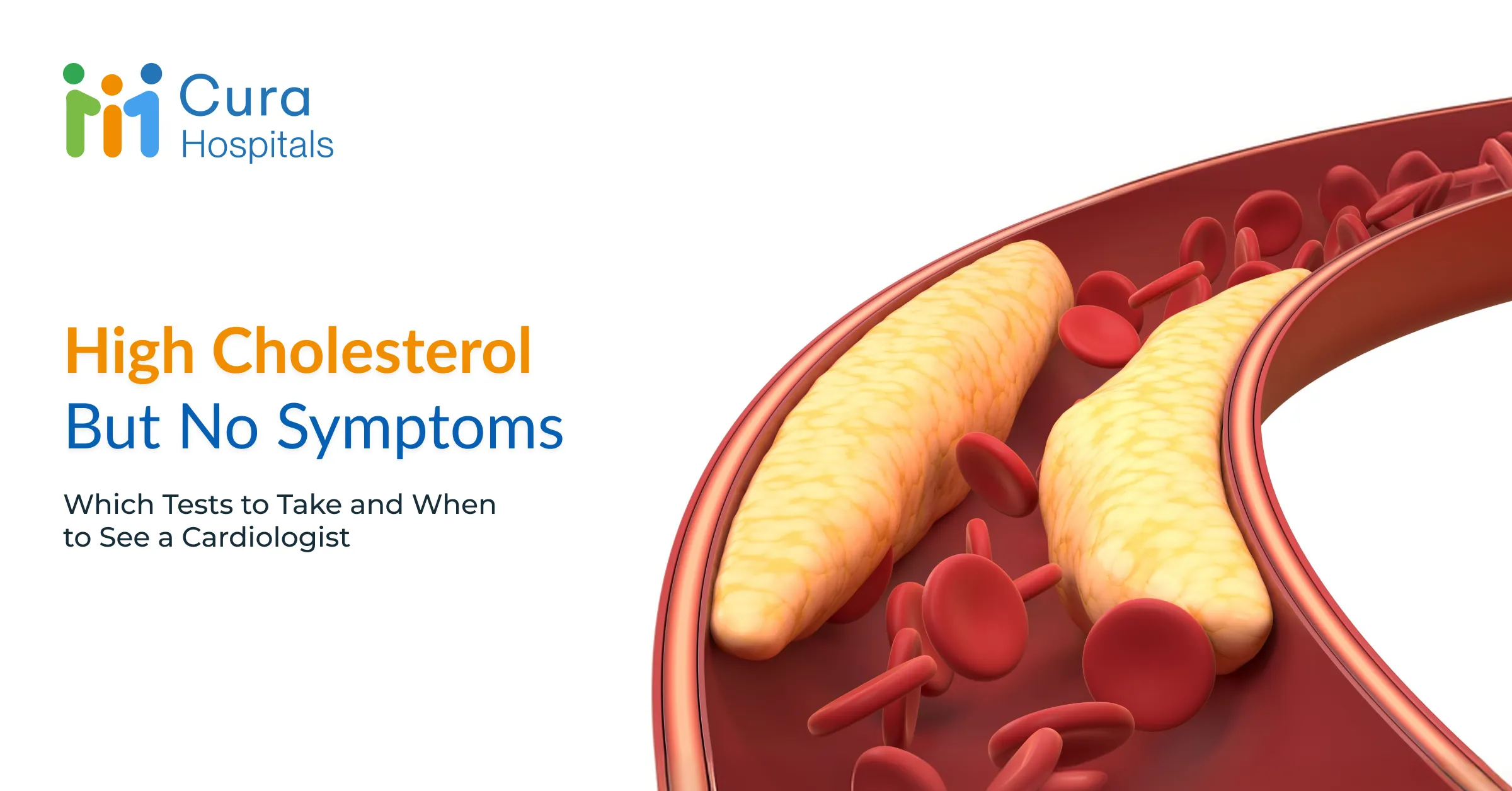
Excess cholesterol simply moves through the bloodstream. Over years, surplus lipids work their way into the inner walls of the arteries, setting off a slow inflammatory process known as atherosclerosis, or hardening of the arteries. Plaque accumulates gradually, and the passageway available for blood flow narrows along with it.
Because this happens so subtly, most people have no idea their arteries are narrowing until blood flow is already severely restricted. That is often the point at which a heart attack or stroke arrives seemingly out of nowhere, with no prior warning at all. It is this silent quality that makes preventive blood testing worthwhile, even for someone who feels “entirely healthy”.
Understanding Total Cholesterol, LDL, HDL, and Triglycerides
A standard lipid profile test breaks blood fats down into a handful of components, summarised in the table below.
| Lipid Marker | What It Means | Ideal Goal (General Adult)* |
| Total Cholesterol | The overall measure of cholesterol in your blood. | Less than 200 mg/dL |
| LDL (Low-Density Lipoprotein) | Often called “bad” cholesterol. It deposits extra fat into arterial walls. | Less than 100 mg/dL |
| HDL (High-Density Lipoprotein) | Known as “good” cholesterol. It carries excess fat away from arteries back to the liver. | 40 to 60+ mg/dL (higher is generally protective) |
| Triglycerides | A type of fat that stores unused calories; high levels raise heart risk when paired with high LDL. | Less than 150 mg/dL |
*Target levels are not identical for everyone. A patient with diabetes, hypertension, or a family history of early heart disease may be advised to aim considerably lower, sometimes below 70 mg/dL, or even below 55 mg/dL in higher-risk cases.
When a Repeat Lipid Profile May Be Needed
One elevated reading may not be able to tell the whole story. A recent meal, an acute illness, stress, or ordinary biological fluctuation can all shift the numbers temporarily, and a physician will usually want to rule that out before drawing any firm conclusions.
Your doctor may recommend repeating your lipid profile test if:
- The initial test was non-fasting: While modern guidelines allow non-fasting tests for basic screening, a 9- to 12-hour fasting test provides a more precise measurement of triglycerides and calculated LDL cholesterol.
- Borderline or unexpected results: If your numbers are slightly elevated without a clear risk factor, a repeat test 4 to 8 weeks later helps confirm your baseline.
- Monitoring lifestyle interventions: If you’ve spent 2 to 3 months adjusting your diet and exercise habits, a repeat test evaluates how well those changes are working before deciding on medication.
Other Cardiovascular Risk Tests Doctors May Consider
When a standard lipid panel comes back elevated, a physician or cardiologist may order further tests to build a more complete picture of cardiovascular risk.
- ApoB and Lipoprotein(a) [Lp(a)] look at the actual number of plaque-forming particles circulating in the blood. Elevated Lp(a) tends to run in families and carries its own independent risk, separate from LDL.
- High-Sensitivity C-Reactive Protein (hs-CRP) measures systemic inflammation. Paired with high LDL, an elevated hs-CRP suggests plaque may be forming more actively than the lipid numbers alone would indicate.
- A Coronary Artery Calcium (CAC) scan, a low-dose CT scan of the heart, quantifies calcified plaque directly within the coronary arteries. Where other tests estimate risk, this one shows physical evidence of whether structural changes have already begun.
- HbA1c and fasting blood sugar are checked because diabetes accelerates arterial damage considerably, making blood sugar assessment a routine part of any thorough cholesterol evaluation.
- An ECG or echocardiogram rounds out the picture where needed, assessing the heart’s electrical activity and physical structure when other risk factors are already present.
Who Should See a Cardiologist Sooner?
A primary care physician can manage mild cholesterol elevations without difficulty. Certain circumstances, though, call for a specialist without delay, and it is worth searching for a qualified cardiologist near me if any of the following apply.
- LDL cholesterol at 190 mg/dL or higher, or triglycerides above 500 mg/dL
- A strong family history: a parent or sibling who had a heart attack or stroke young, before 55 for men or 65 for women
- Suspected Familial Hypercholesterolemia, a genetic condition that produces severe, lifelong high cholesterol and rarely responds to diet changes on its own
- High cholesterol alongside diabetes, high blood pressure, chronic kidney disease, or a smoking history, since the risks compound
- Side effects such as muscle aches from a first attempt at statin therapy, warranting an alternative plan tailored by a specialist
Lifestyle Modifications and Medication Options
Managing cholesterol well tends to rest on two things working together: habits sustained over the long term and medical therapy where it is genuinely needed.
Lifestyle measures:
- Soluble fibre (oats, beans, lentils), which binds to cholesterol during digestion
- Swapping saturated fats (butter, fatty meats, palm oil) for unsaturated alternatives (olive oil, nuts, avocados), and minimising trans fats and refined sugar
- Roughly 150 minutes of moderate aerobic exercise a week, such as brisk walking, swimming, or cycling, to help raise HDL and lower triglycerides
- Losing 5 to 10 percent of excess body weight, which can meaningfully lower LDL
- Quitting smoking, since smoking damages artery walls directly and lowers protective HDL
Medical therapies, when lifestyle changes aren’t enough:
- Statins, the primary treatment for lowering LDL and stabilising plaque that has already formed
- Cholesterol absorption inhibitors such as Ezetimibe, often layered on top of statins to block absorption in the gut
- PCSK9 inhibitors or Bempedoic acid, for more severe cases or patients who cannot tolerate standard statin doses
Red Flags That Require Emergency Care
High cholesterol itself does not cause pain, but its complications, a heart attack or stroke, most certainly do, and both count as genuine medical emergencies.
Seek emergency help immediately if you or someone nearby experiences:
- Sudden pressure, tightness, squeezing, or aching in the centre or left side of the chest that lasts more than a few minutes
- Pain that spreads to the shoulders, neck, jaw, back, or one or both arms
- Sudden difficulty breathing, whether or not chest discomfort is present
- Sudden numbness or weakness in the face, arm, or leg, particularly on one side of the body, along with sudden confusion or difficulty speaking
- Unexplained cold sweat, dizziness, or sudden lightheadedness paired with nausea
None of these should wait.
Schedule Your Cardiac Risk Assessment at Cura Hospitals
There is little reason to wait for symptoms before addressing heart health. Routine screening and early intervention remain the most reliable defence against cardiovascular disease.
At Cura Multispecialty Hospitals, our Cardiology Department provides comprehensive preventive heart care, advanced lipid testing, digital diagnostic imaging, coronary calcium scoring, and personalised risk evaluations guided by experienced cardiologists among them. Whether the need is clarification of a recent test result or a tailored treatment plan for managing cholesterol levels, our cardiac care team is available to help.
Book a Cardiology Consultation at Cura Hospitals
Call Us: +91 87480 30303 | 24/7 Emergency: +91 84312 41403
Locations: Kammanahalli & Kanakapura Road, Bengaluru
Media Center Health Concerns?
Our specialists at Cura Hospitals are here to help with screening, diagnosis, risk assessment, and personalized treatment plans tailored to your health needs.
Schedule A ConsultationFrequently Asked Questions
Yes. High cholesterol is usually silent and is typically only found through a blood test, not through how you feel.
Yes, for a while. It can sit unnoticed for years, but the lack of symptoms doesn’t mean it isn’t gradually affecting your arteries.
In the short term, yes. Over the long term, unmanaged high cholesterol raises your risk of heart attack and stroke, even if you feel fine today.
High cholesterol itself rarely causes direct signs, but possible indicators of its complications include chest pain or pressure, leg pain when walking (claudication), yellowish skin deposits (xanthomas), fatty bumps around the eyes (xanthelasma), a greyish ring around the cornea (corneal arcus), shortness of breath, numbness or coldness in the limbs, erectile dysfunction, unexplained fatigue, and in severe cases, a heart attack or stroke as the first sign.
The heart and arteries bear the brunt of the damage, through plaque buildup and narrowed blood flow, though the liver is the organ that actually produces and regulates most of the body’s cholesterol.
Related Blogs
Kidney Stone Size Guide: Can It Pass Naturally, or Does It Need RIRS, URS, or PCNL?
Leg Pain, Swelling or a Non-Healing Wound: Vascular Surgeon, Orthopaedic Doctor or Diabetologist?