
Haemorrhoids

What areHaemorrhoids ?
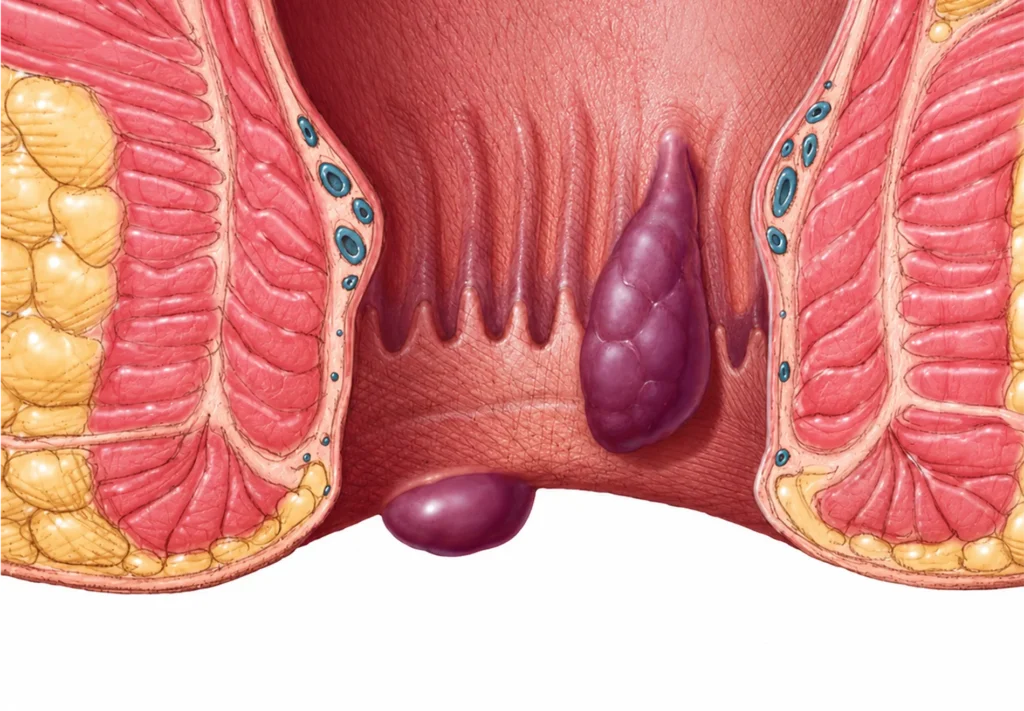
Haemorrhoids, also called piles, are swollen veins in the lower rectum or around the anus, similar in nature to varicose veins. They’re extremely common and affect most people at some point in their lives. In many cases, they cause little to no discomfort and resolve on their own with simple home care.
There are two main types: internal haemorrhoids, which form inside the rectum and are usually painless, and external haemorrhoids, which develop under the skin around the anus and are more likely to cause pain and discomfort. A third, more severe form, called a thrombosed haemorrhoid, occurs when blood pools and clots inside an external haemorrhoid, causing significant pain.
Symptoms of Haemorrhoids
Symptoms vary depending on the type of haemorrhoid.

Causes of Haemorrhoids
Haemorrhoids develop when increased pressure causes the veins around the anus and lower rectum to stretch and bulge.

Straining during bowel movements:

The most common trigger, putting excessive pressure on rectal veins.
Chronic constipation or diarrhoea:
Both increase strain on the anal area over time.
Prolonged sitting:
Especially on the toilet, which increases pressure in the lower rectum.
Low-fibre diet:
Leads to harder stools and more straining.
Pregnancy:
The growing baby's weight puts pressure on the pelvic region, raising the risk.
Obesity:
Excess body weight adds sustained pressure on the rectal veins.
Age-related tissue weakening:
The tissues supporting rectal veins naturally lose strength over time.
Regularly lifting heavy objects:
Increases abdominal pressure with each lift.
Treatment Options for Haemorrhoids
Most haemorrhoids respond well to conservative measures. Medical or surgical intervention is only needed when symptoms are persistent or severe.

When to See a Specialist
- Rectal bleeding that persists or is heavy
- Haemorrhoids that don't improve after a week of home care
- Severe or worsening pain around the anus
- A prolapsed haemorrhoid that can't be pushed back in
- Any rectal bleeding alongside changes in bowel habits or stool colour, which needs prompt evaluation to rule out other conditions

Early evaluation can help manage symptoms sooner and lower the risk of related complications.
Book An AppointmentComprehensive healthcare backed by experience, advanced infrastructure, and patient-first care
Thousands of patients across specialities have trusted Cura for their care.
Round-the-clock access to emergency care and medicines across both campuses.
Fully equipped inpatient facilities to support your recovery comfortably.
Every process meets a nationally recognised standard for patient safety and quality.
40+ insurance and TPA partners accepted across both campuses.
Questions? Answered.
For mild cases, a combination of warm sitz baths, a high-fibre diet, increased water intake, and over-the-counter creams can ease symptoms within a few days. Avoiding straining and prolonged sitting also speeds up recovery.
Most haemorrhoids resolve completely, either on their own or with treatment. However, they can recur, especially without lifestyle changes like a high-fibre diet and staying hydrated. Procedures like rubber band ligation or surgery offer more lasting results for persistent cases.
The best treatment depends on the severity. Mild cases respond well to home care and dietary changes. Persistent or more advanced haemorrhoids are effectively treated with minimally invasive procedures like rubber band ligation. Surgery is reserved for severe or recurring cases.
Since both spellings are commonly searched, the answer is the same regardless of spelling: treatment ranges from home remedies and topical creams for mild symptoms to rubber band ligation, sclerotherapy, or surgery for more persistent cases.
Yes, in many cases. Eating a high-fibre diet, drinking enough water, staying active, and avoiding prolonged sitting or straining during bowel movements significantly reduce the risk of developing haemorrhoids or having them return