
Ovarian Cyst

What Is Ovarian Cyst
An ovarian cyst is a fluid-filled sac that forms in or on an ovary. They’re extremely common, and most women develop one at some point without ever knowing it. Most ovarian cysts are harmless, cause little to no discomfort, and go away on their own within a few months.
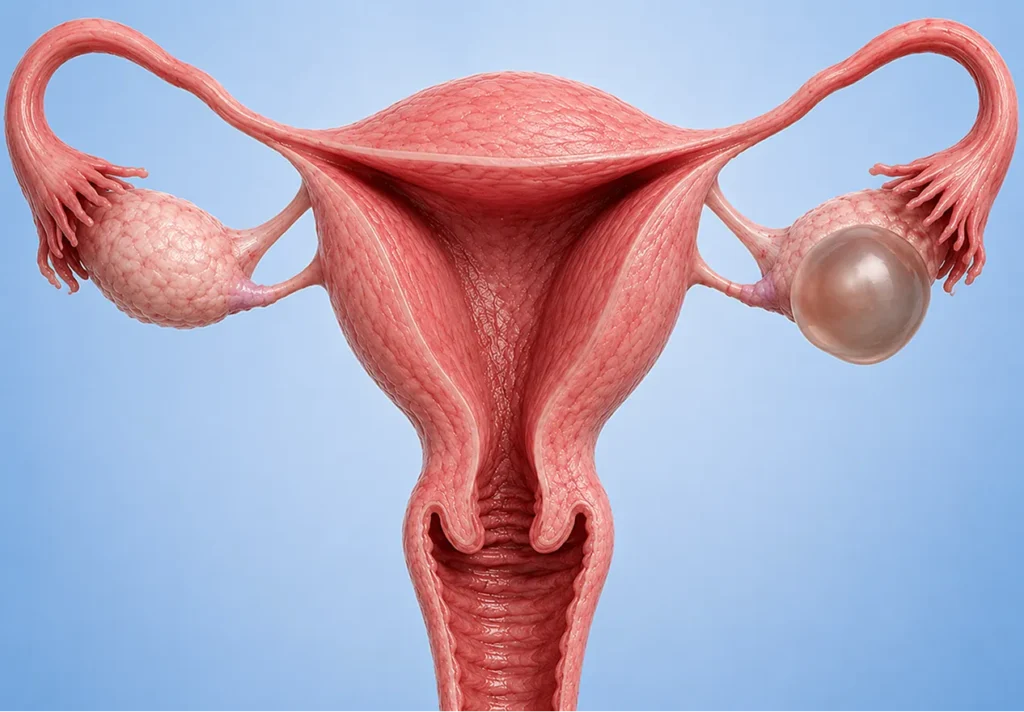
Symptoms of Ovarian Cyst
Most ovarian cysts cause no symptoms at all. When a cyst grows large enough, it can cause:


Causes of Ovarian Cyst

Functional cysts:

The most common type, forming when a follicle doesn't release its egg during ovulation (follicular cyst) or when the egg-releasing follicle reseals after ovulation (corpus luteum cyst). These usually resolve on their own.
Dermoid cysts:
Develop from egg-producing cells and can contain tissue like hair or skin; rarely cancerous.
Cystadenomas:
Form on the surface of the ovary and can grow quite large.
Endometriomas:
Linked to endometriosis, where tissue similar to the uterine lining attaches to the ovary and forms a cyst.
Hormonal factors:
Fertility medications that trigger ovulation can increase the chance of cyst formation.
Pregnancy and prior cysts:
A cyst that forms during ovulation can persist through pregnancy, and a history of cysts increases the likelihood of developing more.
Treatment Options for Ovarian Cysts
Treatment depends on the cyst's size, type, your age, and your symptoms.

When to See a Gynaecologist
- Persistent or worsening pelvic pain
- Bloating or fullness that doesn't go away
- Sudden, severe abdominal pain, especially with fever or vomiting
- An ovarian cyst found after menopause
- A history of recurring ovarian cysts

Early evaluation can help manage symptoms sooner and lower the risk of related complications.
Book An AppointmentComprehensive healthcare backed by experience, advanced infrastructure, and patient-first care
Thousands of patients across specialities have trusted Cura for their care.
Round-the-clock access to emergency care and medicines across both campuses.
Fully equipped inpatient facilities to support your recovery comfortably.
Every process meets a nationally recognised standard for patient safety and quality.
40+ insurance and TPA partners accepted across both campuses.
Questions? Answered.
Most ovarian cysts are harmless and resolve on their own without treatment. In rare cases, a cyst can twist, rupture, or, particularly after menopause, turn out to be cancerous, which is why persistent or severe symptoms should always be checked.
Most cysts form naturally during the menstrual cycle when a follicle doesn’t release its egg or reseals after ovulation. Less commonly, cysts can develop from other cell types, fertility treatments, or conditions like endometriosis.
For small, symptom-free cysts, watchful waiting with follow-up ultrasounds is often enough, since most resolve on their own. Larger, persistent, or symptomatic cysts may need hormonal birth control to prevent new ones, or surgery to remove the cyst itself.
Many cysts cause no early signs at all. When symptoms do appear, they typically include mild pelvic pain, bloating, or a feeling of fullness in the lower belly.
Most ovarian cysts don’t interfere with fertility, especially functional cysts that resolve on their own. However, certain types, like endometriomas, or cysts requiring surgery, can sometimes affect ovarian function, so it’s worth discussing with a specialist if you’re trying to conceive.