
Appendicitis

What Is Appendicitis?
Appendicitis is inflammation of the appendix, a small finger-shaped pouch attached to the colon on the lower right side of the abdomen. When the appendix becomes blocked, bacteria multiply quickly inside it, causing swelling, infection, and a buildup of pus.
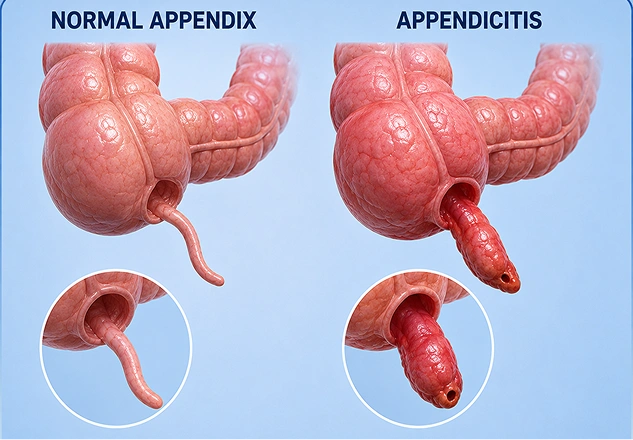
Symptoms of Appendicitis
PCOS symptoms vary widely between individuals; some experience several signs, others very few. A diagnosis is typically made when at least two of the following are present


Causes of Appendicitis
Appendicitis is usually caused by a blockage inside the appendix, which allows bacteria to multiply rapidly and triggers inflammation.

Blockage from stool or debris

The most common cause, restricting normal drainage of the appendix.
Swollen lymphoid tissue
Can narrow the appendix opening, often following an infection elsewhere in the body.
Infection
Bacterial overgrowth following a blockage leads to swelling, pus buildup, and pain.
Rarely, a tumor or parasite
Less common causes that can also obstruct the appendix.
Treatment Options For Appendicitis
Cancer treatment is highly individualized, depending on the type, stage, and location of cancer, as well as the patient's overall health. Common treatment approaches include:

When to See a Gynaecologist
Appendicitis is a medical emergency. Seek immediate care if you experience:
- Sudden, worsening abdominal pain, especially in the lower right side
- Pain combined with fever, nausea, or vomiting
- Abdominal pain that worsens with movement or coughing
- Severe or sudden belly pain that doesn't go away

Early evaluation can help manage symptoms sooner and lower the risk of related complications.
Book An AppointmentComprehensive healthcare backed by experience, advanced infrastructure, and patient-first care
Thousands of patients across specialities have trusted Cura for their care.
Round-the-clock access to emergency care and medicines across both campuses.
Fully equipped inpatient facilities to support your recovery comfortably.
Every process meets a nationally recognised standard for patient safety and quality.
40+ insurance and TPA partners accepted across both campuses.
Questions? Answered.
Appendicitis is usually caused by a blockage inside the appendix, often from stool, swollen tissue, or rarely a tumor, which allows bacteria to multiply and trigger inflammation.
Treatment usually involves surgical removal of the appendix (appendectomy), often along with antibiotics. In mild, uncomplicated cases, antibiotics alone may sometimes be used.
Appendicitis can worsen quickly, often within 24 to 48 hours of symptoms starting, and the risk of rupture increases the longer it goes untreated. This is why sudden abdominal pain shouldn’t be ignored.
The earliest sign is usually pain near the belly button that shifts to the lower right abdomen, often along with nausea, loss of appetite, and a mild fever.
In some mild cases, appendicitis can be treated with antibiotics alone, but there’s a higher chance of it recurring if the appendix isn’t removed. Most cases still require surgery for a full resolution.