
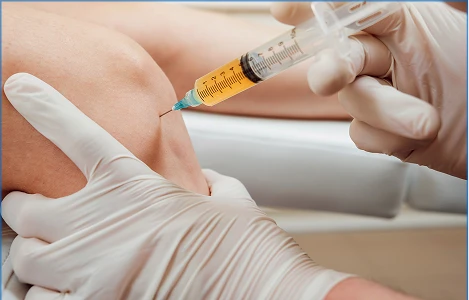
Surgery Is the Last Option
Conservative options — medication, physiotherapy, injections — are explained and tried first, wherever clinically appropriate.


Dr. Abrar Mohammed, a fellowship-trained joint replacement surgeon, for knee replacement, hip replacement and total joint evaluation. Understand your robotic-assisted and conventional joint replacement options at Cura Hospitals in Kammanahalli and Kanakapura Road.
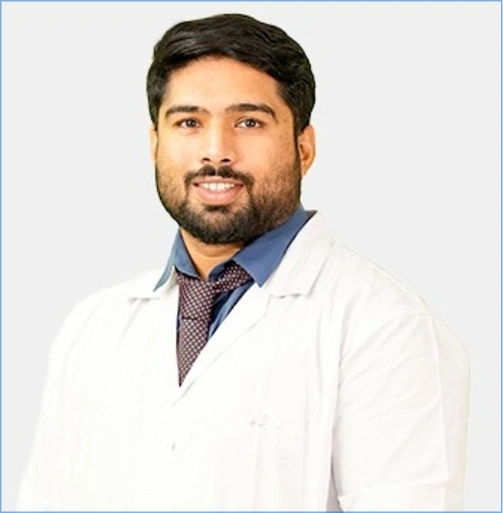
M.B.B.S., M.S. (Orthopaedics) · Fellowship in Joint Replacement
Orthopaedic & Joint Replacement Surgeon · 8+ years of dedicated patient care
Completed specialised fellowship training in joint replacement at the Sanjay Gandhi Institute of Trauma and Orthopaedics. His consultation focuses on understanding the source of pain, explaining treatment alternatives clearly, and developing a patient-specific plan for joint preservation, knee replacement or hip replacement.
Get the right diagnosis first.
A specialist assessment identifies the cause and stage of joint damage, reviews treatment already tried, and clarifies whether replacement is actually required now.
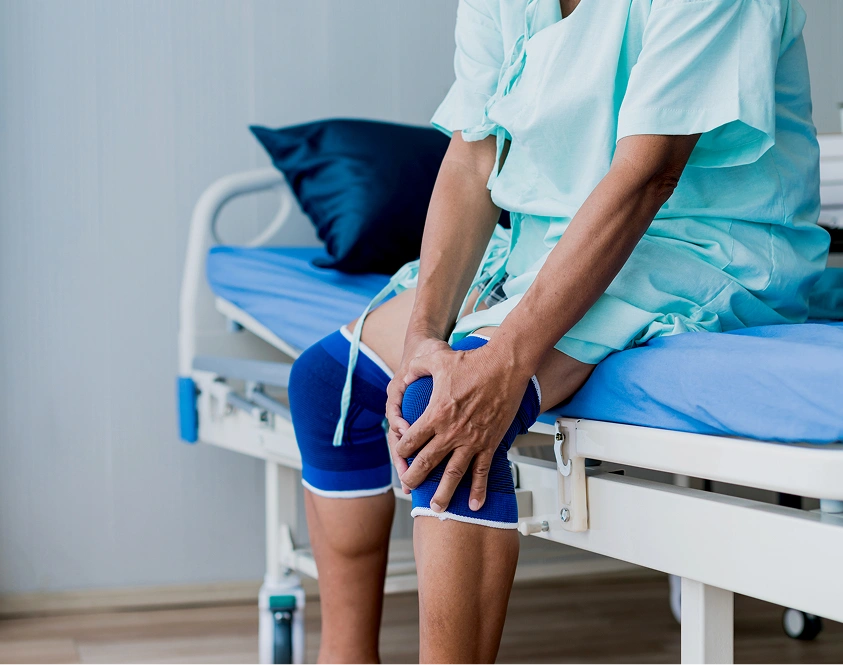
Conservative options — medication, physiotherapy, injections — are explained and tried first, wherever clinically appropriate.

For eligible knee cases, the surgical plan is built around your joint anatomy, alignment and pattern of damage.
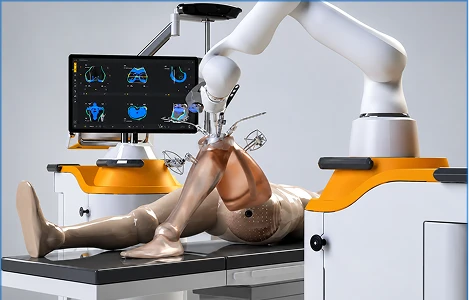
For selected knee replacements, robotic-assisted technology supports precise bone preparation and implant positioning — the surgeon remains in control throughout.

Physiotherapy-led rehabilitation and surgeon follow-up are built into the care pathway, for both knee and hip replacement.
A specialist assessment identifies the cause and stage of joint damage, reviews treatment already tried, and clarifies whether replacement is actually required now.
Tell us the concern and bring or upload available X-rays, scans and previous treatment records.
Dr. Abrar assesses pain, movement, alignment, stability and impact on daily activity.
Stage of arthritis and non-surgical, partial, total or robotic-assisted options are explained.
Existing health conditions, anaesthesia fitness, implant considerations and expected stay are reviewed.
The hospital team supports surgery, pain management and mobilisation as clinically appropriate.
Physiotherapy, home exercises and surgeon follow-up support recovery and mobility goals.
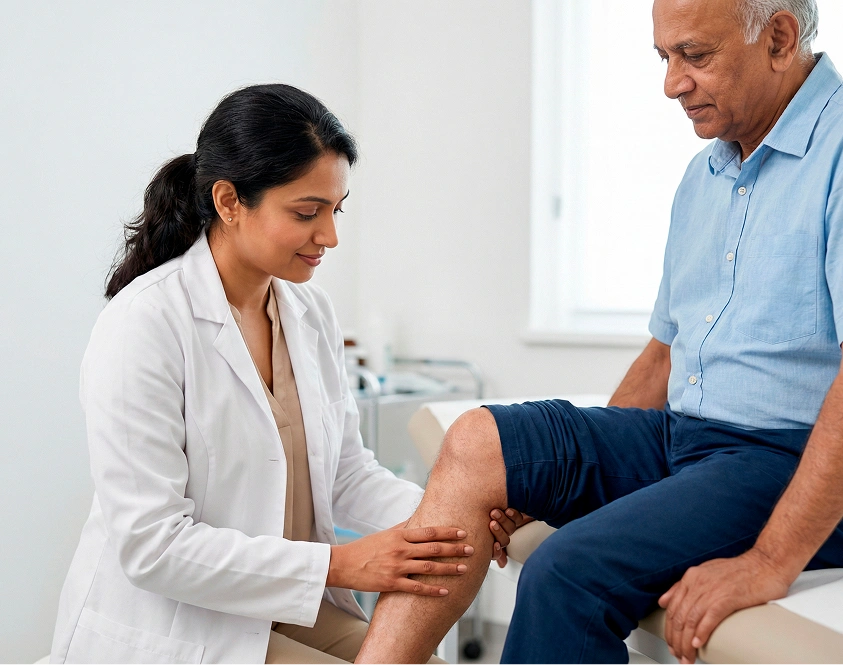
Get evaluated first. Dr. Abrar explains non surgical care, partial and total options before recommending anything.

No.18, Kanakapura Rd, Venkatareddy Layout, Doddakallasandra, Bengaluru, Karnataka 560062 · OPD 8am to 9pm

1, Bethel St, HRBR Layout 2nd Block, Kalyan Nagar, Kammanahalli, Bengaluru, Karnataka 560043 · OPD 8am–9pm
Surgery is always a last resort. Most joint conditions are first managed with medication, physiotherapy and lifestyle changes. Replacement is recommended only when conservative options have been exhausted or delay would worsen the outcome.
A surgeon controlled procedure in which technology supports patient specific planning and execution of the surgical plan. The surgeon remains responsible for every treatment and surgical decision throughout.
Yes. Hip and knee joints differ in anatomy, implant types and surgical approach, though the evaluation process (imaging, fitness assessment, discussion of options) follows a similar structure.
Yes. Bring or upload X rays, scans, prescriptions and the existing surgical recommendation so the consultation can review whether surgery is required and what the expected recovery pathway looks like.
Most patients begin walking with assistance within a day or two of surgery. Full recovery typically takes between six weeks and three months depending on the joint, the individual and adherence to physiotherapy.
Yes, for eligible procedures through our insurance and TPA partners. We recommend confirming your coverage before your procedure. Our team is happy to guide you.